
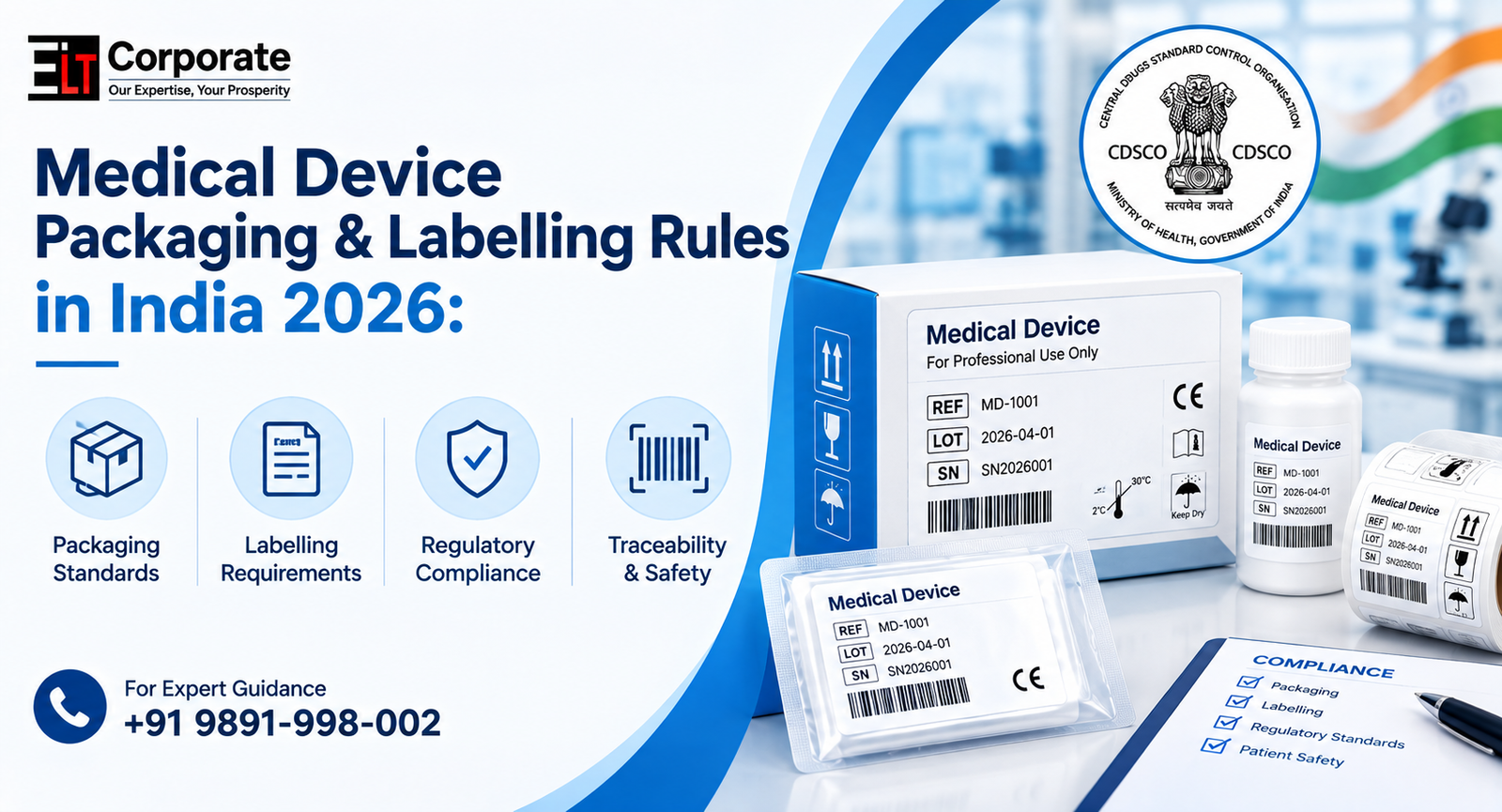
Medical Device Packaging & Labelling Rules in India 2026 are important for manufacturers, importers, authorised representatives and other businesses that place regulated medical devices on the Indian market.
In India, medical devices are regulated under the Medical Devices Rules, 2017. Rule 44 specifically sets out information that must appear on the label, shelf pack, outer cover, and applicable outer packaging of a medical device.
The label is not simply a marketing element. It provides important information that helps healthcare professionals, distributors and users identify the device, understand its intended use, handle it correctly and recognise applicable warnings.
CDSCO also maintains guidance and regulatory information relating to medical devices, including registration and labelling requirements.
Medical device labels in India should provide required information such as the device name, manufacturer details, quantity, manufacturing/expiry information where applicable, batch or lot identification, storage conditions, sterile status, and relevant warnings or precautions.
Why Is Medical Device Labelling Important?
Correct packaging and labelling help a manufacturer demonstrate that its product is being supplied with appropriate information for safe and compliant use.
A good label should be:
- Accurate
- Legible
- Durable
- Consistent with the approved product information
- Easy for the intended user to understand
- Supported by the manufacturer’s technical documentation
Importantly, the intended use of a device is based on information provided in its labelling, instructions for use, and promotional material. Therefore, manufacturers should ensure that their claims are consistent with the approved intended purpose.
For businesses applying for CDSCO registration, labels and Instructions for Use (IFU) can form an important part of the regulatory documentation. ELT Corporate’s medical-device registration service also identifies labels and IFUs among the documentation used for medical device registration.
Medical Device Packaging & Labelling Rules in India 2026
Understanding Medical Device Packaging & Labelling Rules in India 2026 helps manufacturers prepare compliant packaging, labels and Instructions for Use.
1. Clearly Mention the Name of the Medical Device
The name of the medical device should be clearly identifiable on the label.
The product name should correspond with the product information submitted during the applicable regulatory process. Avoid using a different product name, model description, or intended purpose on the packaging without evaluating whether regulatory documentation also needs to be updated.
Example:
Instead of using only a brand name, the label should make the actual device identifiable to the user.
2. Provide Manufacturer Name and Address
The label should include the name of the manufacturer and the address of the manufacturing premises, as required under Rule 44.
This information helps identify who manufactured the device and where it was manufactured.
For imported medical devices, manufacturers and authorised representatives should also ensure that the information appearing on the packaging is consistent with the applicable Indian regulatory documentation.
For more information about regulatory pathways, businesses can review our Medical Device Registration in India service.
3. Mention Net Quantity Correctly
Where applicable, the label should provide the correct statement of the net quantity.
The quantity may be expressed according to the nature of the device, including:
- Weight
- Measure
- Volume
- Number of units
The Medical Devices Rules also specify that the number of devices contained in the package should be expressed using the metric system where applicable.
This is particularly important for products supplied in multiple-unit packages.
4. Manufacturing Date, Expiry Date, or Shelf Life
Manufacturers should provide the applicable month and year of manufacture and expiry, or alternatively the shelf life, subject to the provisions and exceptions under the Rules.
For sterile devices, the date of sterilisation may be treated as the date of manufacture in the circumstances specified by the Rules.
The Rules also provide exceptions relating to certain stable materials and certain medical equipment or instruments where an expiry date may not be necessary.
Therefore, manufacturers should not apply a generic expiry-date approach to every device.
5. Batch Number or Lot Number
Traceability is a major part of medical-device compliance.
The label should include an appropriate batch number or lot number, using the applicable designation such as:
- Lot No.
- Lot
- Batch No.
- B. No.
This information helps manufacturers and regulators trace products during complaints, investigations, recalls, and post-market activities.
6. Storage and Handling Conditions
Some medical devices require specific storage or handling conditions.
Where applicable, packaging should communicate these requirements clearly.
Examples may include:
- Temperature limits
- Humidity requirements
- Protection from sunlight
- Keep-dry instructions
- Special transportation conditions
- Handling precautions
The objective is to ensure that the device maintains its intended performance throughout storage and distribution.
7. Clearly State Sterile Status and Sterilisation Method
If a medical device is supplied as a sterile product, the label should indicate its sterile status and the applicable sterilisation method.
This is particularly important for devices where sterility is directly connected to safe use.
The information on the packaging should remain consistent with the manufacturer’s validated sterilisation process and technical documentation.
8. Include Appropriate Warnings and Precautions
Medical devices may have risks or limitations that users need to understand before use.
Where relevant, labels should include the following:
- Warnings
- Precautions
- Contraindications
- Handling instructions
- Safety information
Rule 44 specifically requires relevant warnings or precautions where considered necessary to draw the user’s attention to important safety information.
The wording should be clear and should not create a misleading impression about the safety or performance of the product.
9. Mention Medicinal or Biological Substances Where Applicable
Some medical devices may contain or incorporate medicinal or biological substances.
Where applicable, the label should indicate that the device contains such a substance.
This requirement is important because the presence of these substances can affect how the device is understood, handled, and regulated.
Manufacturers should therefore assess the complete composition and intended function of the device before finalising packaging artwork.
10. Ensure Label Information Matches Regulatory Documentation
One of the most important practical steps is to compare the final packaging artwork with the approved regulatory documentation.
Check whether the following are consistent:
- Product name
- Model number
- Intended purpose
- Manufacturer details
- Manufacturing site
- Device classification
- Sterile status
- Storage conditions
- Warnings
- Batch/lot information
- Expiry or shelf-life information
- IFU
This is especially important because the MDR framework connects intended use with information provided through labelling, IFU, and promotional material.
Medical Device Packaging Requirements in India
Following the Medical Device Packaging & Labelling Rules in India 2026 helps ensure that packaging protects the device while providing the information required for safe handling and regulatory compliance.
Packaging and labelling should be considered together when reviewing the Medical Device Packaging & Labelling Rules in India 2026.
Packaging is responsible not only for presenting the product but also for protecting the medical device from damage, contamination, and deterioration during storage and transportation.
Depending on the type of device, manufacturers may need to consider:
Primary Packaging
This is packaging that directly contains or protects the medical device.
Secondary Packaging
This may provide additional protection and carry important product information.
Outer Packaging
Outer coverings may also need to carry applicable regulatory information. Rule 44 specifically refers to labels, shelf packs, outer covers, and every outer covering in which the medical device is packed.
Sterile Barrier Packaging
For sterile products, the packaging system should be suitable for maintaining sterility until the point of use and should align with the device’s validated processes.
A practical review of the Medical Device Packaging & Labelling Rules in India 2026 can help identify missing or inconsistent information before packaging artwork is approved.
Medical Device Labelling Checklist for Manufacturers
Before releasing packaging artwork, manufacturers can use this simple checklist to review the Medical Device Packaging & Labelling Rules in India 2026:
| Checkpoint | What to Verify |
| Product name | Correct and consistent |
| Manufacturer | Name and manufacturing address |
| Quantity | Correct unit/quantity |
| Date | Manufacturing/expiry or shelf life, where applicable |
| Lot/Batch | Traceability information |
| Sterility | Status and sterilisation method, where applicable |
| Storage | Applicable storage conditions |
| Warnings | Relevant precautions |
| IFU | Consistent with the label |
| Regulatory documents | Information matches submitted/approved documents |
This type of pre-release review can reduce avoidable inconsistencies between packaging artwork and regulatory submissions.
Reviewing the Medical Device Packaging & Labelling Rules in India 2026 before releasing packaging artwork can help manufacturers identify and correct common compliance mistakes.
Common Medical Device Labelling Mistakes to Avoid
Manufacturers and importers should avoid:
1. Incorrect Manufacturer Details
Using an old address or a different manufacturing location can create a documentation mismatch.
2. Different Product Names
The name on the package should be consistent with regulatory documents.
3. Missing Batch or Lot Information
Traceability information should not be overlooked.
4. Incorrect Expiry Information
Expiry and shelf-life information should be technically justified and presented according to applicable requirements.
5. Unsupported Claims
Marketing claims should not contradict the approved intended use or regulatory documentation.
6. Poorly Designed Labels
Text that is too small, unclear, or difficult to read can reduce usability.
7. Ignoring IFU Consistency
The label and IFU should communicate consistent information.
8. Failing to Review Changes
A packaging artwork change should be assessed to determine whether it creates any regulatory implications.
CDSCO Registration and Medical Device Labelling
Packaging and labelling should ideally be planned before the regulatory submission is finalised, rather than treated as an afterthought.
CDSCO regulates medical devices under the Medical Devices Rules, 2017, and its official website provides the Rules, regulatory notifications, and medical-device guidance.
For imported devices, the applicable import-licensing process can involve Form MD-14 and Form MD-15, depending on the regulatory pathway. CDSCO documentation identifies MD-14/MD-15 for applications relating to import licences.
You can also read our detailed CDSCO Medical Device Registration 2026 guide for a broader overview.
Important 2026 Regulatory Update
The regulatory framework continues to evolve.
For example, CDSCO’s current Medical Devices Rules page lists amendments to the MDR framework, including amendments relating to licensing, testing laboratories and other regulatory matters.
A 2026 amendment published by CDSCO also amended certain provisions concerning Quality Management System requirements and Rule 63.
Therefore, manufacturers should avoid relying only on older checklists or packaging templates. The latest applicable notifications, rules, and regulatory requirements should be reviewed before finalising a medical device label.
How ELT Corporate Can Help With Medical Device Packaging & Labelling Compliance
ELT Corporate helps manufacturers and importers understand the Medical Device Packaging & Labelling Rules in India 2026 and review their packaging, labels, IFU, and related regulatory documentation.
ELT Corporate can assist medical device manufacturers, importers, and businesses with regulatory and compliance requirements connected with the Indian medical-device market.
Our support can include:
- Medical device classification assistance
- CDSCO registration and licensing support
- Medical device packaging and labelling review
- Label and IFU documentation support
- Regulatory document preparation
- Technical documentation coordination
- Import licence support
- Manufacturer licence support
- Regulatory query response assistance
- Compliance review before submission
ELT Corporate’s medical-device services specifically include Medical Device Labeling Compliance, along with manufacturer and importer licensing services.
You can explore our Medical Device Labelling Compliance service or Medical Device Manufacturer License service.
For businesses importing devices into India, our Medical Device Import License service provides additional information about the import pathway.
Conclusion
Medical Device Packaging & Labelling Rules in India 2026 are an important part of overall CDSCO compliance. A medical device label must provide clear, accurate, and relevant information that supports product identification, traceability, safe handling, and appropriate use.
Manufacturers should pay particular attention to the device name, manufacturer details, quantity, manufacturing and expiry information where applicable, batch or lot number, storage conditions, sterile status and warnings.
Most importantly, packaging artwork, labels, IFU, and regulatory documentation should tell the same story.
As India’s medical-device regulatory framework continues to develop, manufacturers and importers should review the latest CDSCO requirements before launching or changing a product.
Check the latest Medical Devices Rules and CDSCO regulatory resources
10 Frequently Asked Questions About Medical Device Packaging & Labelling Rules in India
Q1. What are the Medical Device Packaging & Labelling Rules in India 2026?
Medical device packaging and labelling requirements in India are primarily governed by the Medical Devices Rules, 2017 and applicable amendments, notifications, and regulatory requirements. Rule 44 specifies important information that must appear on applicable medical-device labels and packaging.
Q2. What information must be included on a medical device label in India?
Depending on the device and applicable requirements, information includes the device name, identification details, manufacturer name and address, quantity, manufacturing/expiry information or shelf life, batch/lot number, storage conditions, sterile status and relevant warnings or precautions.
Q3. Is CDSCO registration required for medical devices in India?
The applicable licensing or registration requirements depend on the device and regulatory pathway. Manufacturers and importers should determine the device’s classification and applicable CDSCO requirements before placing the product on the Indian market.
Q4. Are medical device labels required for imported products?
Imported medical devices must comply with applicable Indian regulatory requirements, including applicable labelling requirements. Importers and foreign manufacturers should ensure that packaging information is consistent with their Indian regulatory documentation.
Q5. What is the difference between medical device packaging and labelling?
Packaging refers primarily to the materials and system used to contain and protect the device. Labelling refers to the information provided on the device, package or accompanying materials to identify the product and communicate required information.
Q6. Is the batch number mandatory on a medical device label?
Where Rule 44 applies, the medical device label should provide a distinctive batch or lot number using the prescribed form of identification.
Q7. Do sterile medical devices need special labelling?
Yes. Where a device is supplied as sterile, the label should indicate its sterile status and sterilisation method as applicable under the Rules.
Q8. Can manufacturers change medical device packaging after CDSCO approval?
A packaging change should be evaluated before implementation. Depending on the nature of the change, it may affect regulatory documentation, product information, technical documentation or other compliance obligations.
Q9. What is an IFU for a medical device?
IFU means Instructions for Use. It provides users with information about how the medical device should be used, handled, stored, and operated safely. The IFU should remain consistent with the device’s approved intended use and other regulatory information.
Q10. Who can help with medical device labelling compliance in India?
A regulatory consultant can help manufacturers and importers review product classification, labels, IFU, technical documentation, and applicable CDSCO requirements. ELT Corporate provides medical-device regulatory and labelling compliance support in India.
Comments are closed