
Introduction
CDSCO Medical Device Registration is an important regulatory process for businesses planning to manufacture, import, or market medical devices in India. Depending on the device and the activity involved, the applicable regulatory pathway, licence, documents, and authority may vary.
Many applicants expect the process to move quickly after submitting an application. However, an application may take longer when the submitted information is incomplete, inconsistent, unclear, or does not adequately address the applicable regulatory requirements.
The Medical Devices Rules, 2017 provide the regulatory framework for medical devices in India, and CDSCO publishes application forms, checklists, FAQs, guidance documents, and other regulatory resources for applicants.
Understanding the common reasons for delay can help manufacturers and importers prepare their applications more carefully before submission.
CDSCO Medical Device Registration: What Does It Mean?
CDSCO Medical Device Registration refers broadly to the regulatory process applicable to medical devices under India’s medical-device framework. The exact requirement depends on factors such as the device, its classification, intended purpose, and whether the applicant is manufacturing or importing the device.
CDSCO’s official resources include forms and checklists for different medical-device applications. The CDSCO website also provides access to the Medical Devices Rules, 2017, classification information, grouping guidance, FAQs, and application checklists. For import activities, for example, CDSCO’s FAQ states that an applicant generally applies in Form MD-14 for an import licence, with the licence issued in Form MD-15, subject to the applicable requirements.
Therefore, before beginning CDSCO Medical Device Registration, businesses should first identify the correct regulatory pathway for their product.
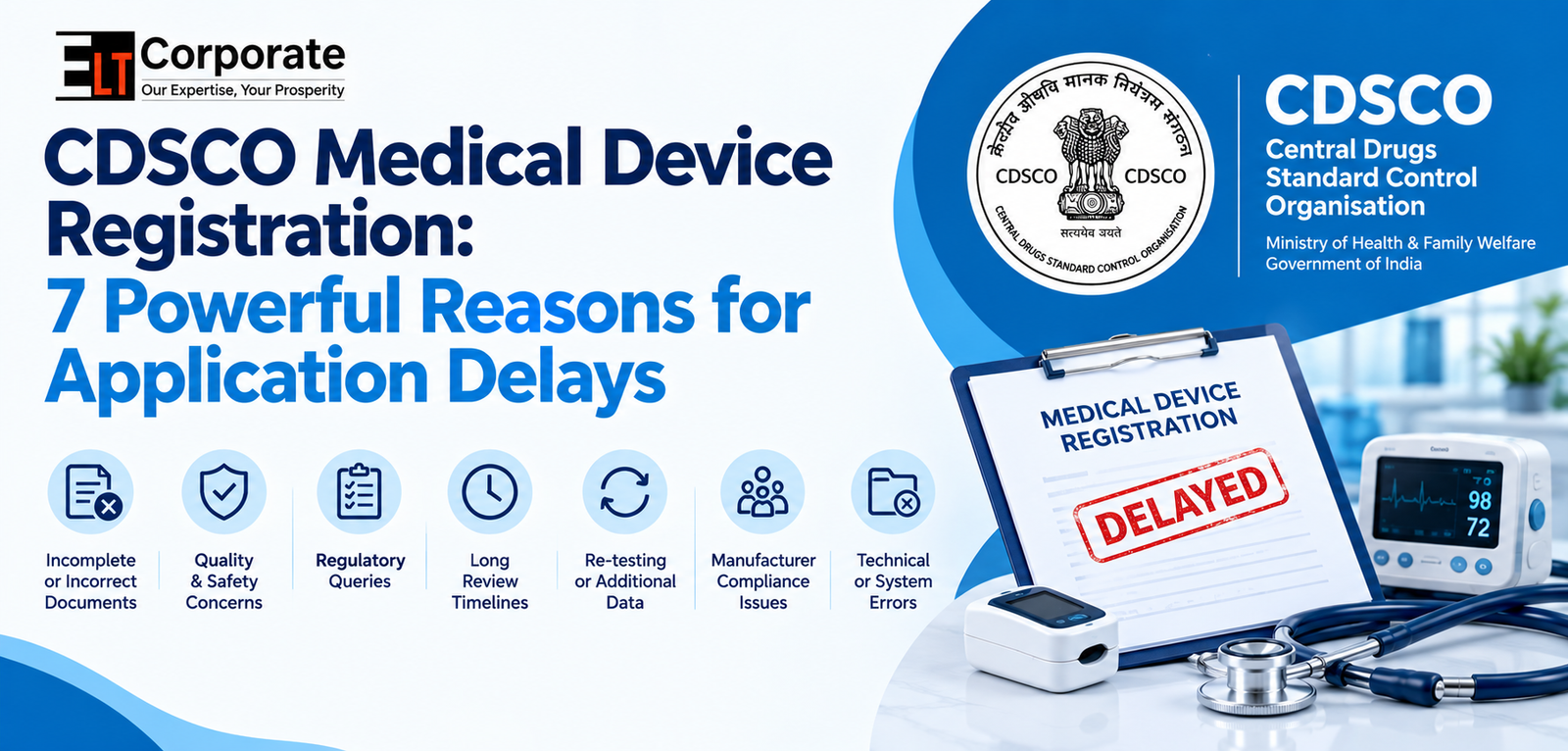
7 Common Reasons for CDSCO Medical Device Registration Application Delays
1. Incomplete or Incorrect Documentation
One of the most common reasons for delay is submitting incomplete documentation.
A CDSCO application can require multiple documents relating to the applicant, manufacturer, product, quality system, technical information, labelling, and regulatory status.
If an important document is missing, incorrectly prepared, outdated, or inconsistent with other submitted information, the application may require clarification or additional documentation.
For example, CDSCO’s published checklists can include documents such as application forms, fee challans, regulatory certificates, quality certificates, declarations, Device Master Files, and labelling information, depending on the application.
How to avoid the delay:
Prepare a document checklist before submission and verify every document against the applicable CDSCO checklist.
2. Incorrect Medical Device Classification
Correct classification is an important part of CDSCO Medical Device Registration.
Medical devices are regulated according to their applicable classification and risk level. If an applicant incorrectly identifies the class of a device, the wrong regulatory pathway or documentation may be selected.
This can result in additional clarification, revised documentation, or the need to provide further justification.
CDSCO provides official classification resources for medical devices and IVDs under the Medical Devices Rules, 2017.
How to avoid the delay:
Review the applicable classification rules and maintain a clear justification for the classification selected for the product.
3. Inconsistency in Product Information
Another common issue is inconsistency between documents.
For example, the following information should be carefully checked for consistency:
- Product name
- Model or catalogue number
- Intended use
- Manufacturer name
- Manufacturing site
- Product variants
- Specifications
- Labelling
- Instructions for Use
- Technical documentation
If information differs between the application form and supporting documents, clarification may be required.
How to avoid the delay:
Create a master product-information sheet and use the same verified information across the entire application package.
4. Weak Technical Documentation
Technical documentation is an important part of medical device regulatory submissions.
Depending on the application, documentation may cover product specifications, device description, design and manufacturing information, safety and performance information, labelling, and other technical details.
CDSCO’s published checklists for medical-device applications identify technical documentation such as the Device Master File and information relating to device description, product specifications, labelling, and design/manufacturing information.
If technical information is unclear or does not adequately support the application, additional questions may arise.
How to avoid the delay:
Review the technical file carefully and make sure the information supports the device’s intended purpose, classification, safety, and performance.
5. Problems With Manufacturer or Quality Documents
For imported medical devices, information relating to the overseas manufacturer and applicable quality documentation can be particularly important.
Depending on the application, documents may include quality-management certificates, regulatory certificates, Free Sale Certificates or Marketing Authorisations, declarations of conformity, and manufacturer-related information. CDSCO’s published import checklists identify several of these documents for applicable applications.
If documents are incomplete, inconsistent, improperly authenticated where required, or unavailable, the application may require further clarification.
How to avoid the delay:
Collect manufacturer documents early and verify their validity, consistency, and applicability before submission.
6. Labelling and Instructions for Use Issues
Labelling and Instructions for Use (IFU) are important parts of medical-device documentation.
Information on the label and IFU should be consistent with the technical documentation and the product information submitted with the application.
Common problems can include:
- Incorrect product information
- Missing required details
- Differences between label and application
- Inconsistent manufacturer details
- Incorrect model or product references
- Unclear intended use
CDSCO’s application checklists specifically identify labelling information and Instructions for Use among relevant submission documents.
How to avoid the delay:
Perform a complete label and IFU review before submitting the CDSCO Medical Device Registration application.
7. Delayed Response to CDSCO Queries
Even after submitting a complete application, CDSCO may seek clarification or additional information during the review process.
A delayed, incomplete, or unclear response can extend the overall timeline.
The regulatory review process may therefore require applicants to monitor their application and respond carefully to any communication or deficiency raised by the authority.
Recent CDSCO guidance also illustrates application pathways in which CDSCO review may be followed by clarification requests before the relevant licence is granted.
How to avoid the delay:
Monitor the application regularly and prepare clear, point-by-point responses to any regulatory query.
How to Avoid CDSCO Medical Device Registration Delays
Businesses can reduce avoidable delays by following a structured preparation process.
1. Identify the Correct Regulatory Pathway
Determine whether your activity involves manufacturing, importing, or another regulated activity and identify the applicable pathway.
2. Confirm Device Classification
Review the applicable classification and document the basis for the classification.
3. Prepare a Complete Document Checklist
Use the relevant CDSCO checklist and verify every required document before submission.
4. Standardise Product Information
Ensure that the product name, manufacturer, model, intended use, specifications, and other information remain consistent throughout the application.
5. Review Technical Documents
Check the Device Master File, technical information, quality documents, labels, IFU, and supporting records before submission.
6. Check Manufacturer Documents
For imported devices, coordinate with the overseas manufacturer early so that required documents are available and properly prepared.
7. Monitor Regulatory Queries
Keep track of application communications and respond to questions with complete and clearly organised information.
CDSCO Medical Device Registration Documents Checklist
The exact documents depend on the applicable application and device. However, applicants may need documents relating to:
- Applicant details
- Manufacturer details
- Device details
- Device classification
- Intended use
- Product specifications
- Device Master File
- Plant Master File, where applicable
- Quality Management System documentation
- Regulatory certificates
- Free Sale Certificate or Marketing Authorisation, where applicable
- Declaration of Conformity
- Labels
- Instructions for Use
- Manufacturing information
- Test or evaluation information, where applicable
- Application forms
- Fee-related documents
- Authorisation documents
The exact checklist should always be checked against the applicable CDSCO requirements for the specific application. CDSCO publishes application checklists and related regulatory resources on its Medical Device & Diagnostics section.
CDSCO Medical Device Registration for Importers
For businesses importing medical devices into India, the regulatory process can involve the overseas manufacturer, Indian authorised agent, product documentation, quality information, and other supporting records.
CDSCO’s published FAQ states that importers generally apply through Form MD-14 for the applicable import licence process, with Form MD-15 being the corresponding licence, subject to the applicable framework.
The applicant should therefore coordinate with the overseas manufacturer before beginning the application so that the required technical and regulatory documents are available.
CDSCO Medical Device Registration for Manufacturers
Indian manufacturers also need to follow the applicable regulatory pathway based on the device and its classification.
Manufacturing applications can require information relating to the manufacturing facility, quality systems, technical documentation, product information, and compliance with applicable requirements under the Medical Devices Rules, 2017.
CDSCO provides specific forms, checklists, guidance documents, and regulatory resources for medical-device manufacturing applications.
Online CDSCO Medical Device Registration
CDSCO operates the SUGAM portal, through which various CDSCO services relating to medical-device import registration and licensing are handled. Before submitting an online application, businesses should make sure that:
- The correct application pathway has been selected.
- Product classification has been reviewed.
- Required documents are ready.
- Technical information is consistent.
- Manufacturer information is accurate.
- Labels and IFU have been reviewed.
- Applicable fees and forms have been checked.
- Supporting documents are available in the required format.
Proper preparation before online submission can help reduce avoidable application queries.
How ELT Corporate Can Help With CDSCO Medical Device Registration
ELT Corporate helps manufacturers, importers, and medical-device businesses understand the applicable regulatory process and organise their application requirements.
Our support can include:
- Understanding the applicable CDSCO requirements
- Reviewing the regulatory pathway
- Supporting medical-device classification
- Preparing and organising application documentation
- Reviewing product and manufacturer information
- Supporting technical-document preparation
- Reviewing labels and supporting documents
- Assisting with online application preparation
- Helping coordinate documentation from overseas manufacturers
- Supporting responses to regulatory queries
- Providing compliance guidance throughout the registration process
The objective is to help businesses approach CDSCO Medical Device Registration with better document preparation, clearer information, and a more organised compliance process.
Conclusion
CDSCO Medical Device Registration can involve multiple regulatory and documentation requirements, and application delays may occur when information is incomplete, inconsistent, incorrectly classified, technically insufficient, or not properly supported.
A careful review of the applicable requirements before submission can help businesses identify potential documentation and compliance issues early. Applicants should also monitor their applications and respond to regulatory queries with complete and accurate information.
For manufacturers and importers entering the Indian medical-device market, proper preparation can make the regulatory process easier to manage and support a more organised approach to compliance.
Frequently Asked Questions About CDSCO Medical Device Registration
Q1. What is CDSCO Medical Device Registration?
CDSCO Medical Device Registration refers to the applicable regulatory process for medical devices under India’s medical-device regulatory framework. The specific requirement depends on the device, classification, intended use, and business activity.
Q2. Why can a CDSCO medical device application be delayed?
Common reasons can include incomplete documents, incorrect classification, inconsistent product information, technical-document deficiencies, manufacturer-document issues, labelling problems, and delayed responses to regulatory queries.
Q3. What documents are required for CDSCO Medical Device Registration?
The documents depend on the specific application. They may include product information, technical documents, quality certificates, manufacturer information, labels, IFU, regulatory certificates, declarations, and prescribed application documents.
Q4. Is medical device classification important for CDSCO registration?
Yes. Classification helps determine the applicable regulatory pathway and requirements. CDSCO publishes classification resources for medical devices and IVDs.
Q5. Can foreign manufacturers apply directly for CDSCO registration?
The applicable process for imported medical devices involves an authorised agent in India and the prescribed regulatory application pathway. The exact requirements depend on the product and application.
Q6. What is MD-14 in medical device registration?
For applicable import-licence applications, Form MD-14 is used for submitting the application, with the corresponding import licence issued in Form MD-15, subject to the applicable requirements.
Q7. How can I avoid CDSCO application rejection or delay?
Businesses should verify the device classification, prepare the applicable checklist, maintain consistent product information, review technical documents, check labels and IFU, and respond properly to regulatory queries.
Q8. Is CDSCO Medical Device Registration available online?
CDSCO operates the SUGAM portal for various regulatory services, including medical-device import registration and licensing activities.
Q9. How long does CDSCO Medical Device Registration take?
The time can vary depending on the device, application pathway, completeness of documentation, regulatory review, and whether clarification or additional information is requested. A fixed timeline should not be assumed for every application.
Q10. Can ELT Corporate help with CDSCO Medical Device Registration?
Yes. ELT Corporate can assist businesses with understanding applicable requirements, documentation preparation, regulatory pathway review, application support, and responses to regulatory queries.
Comments are closed