
Introduction
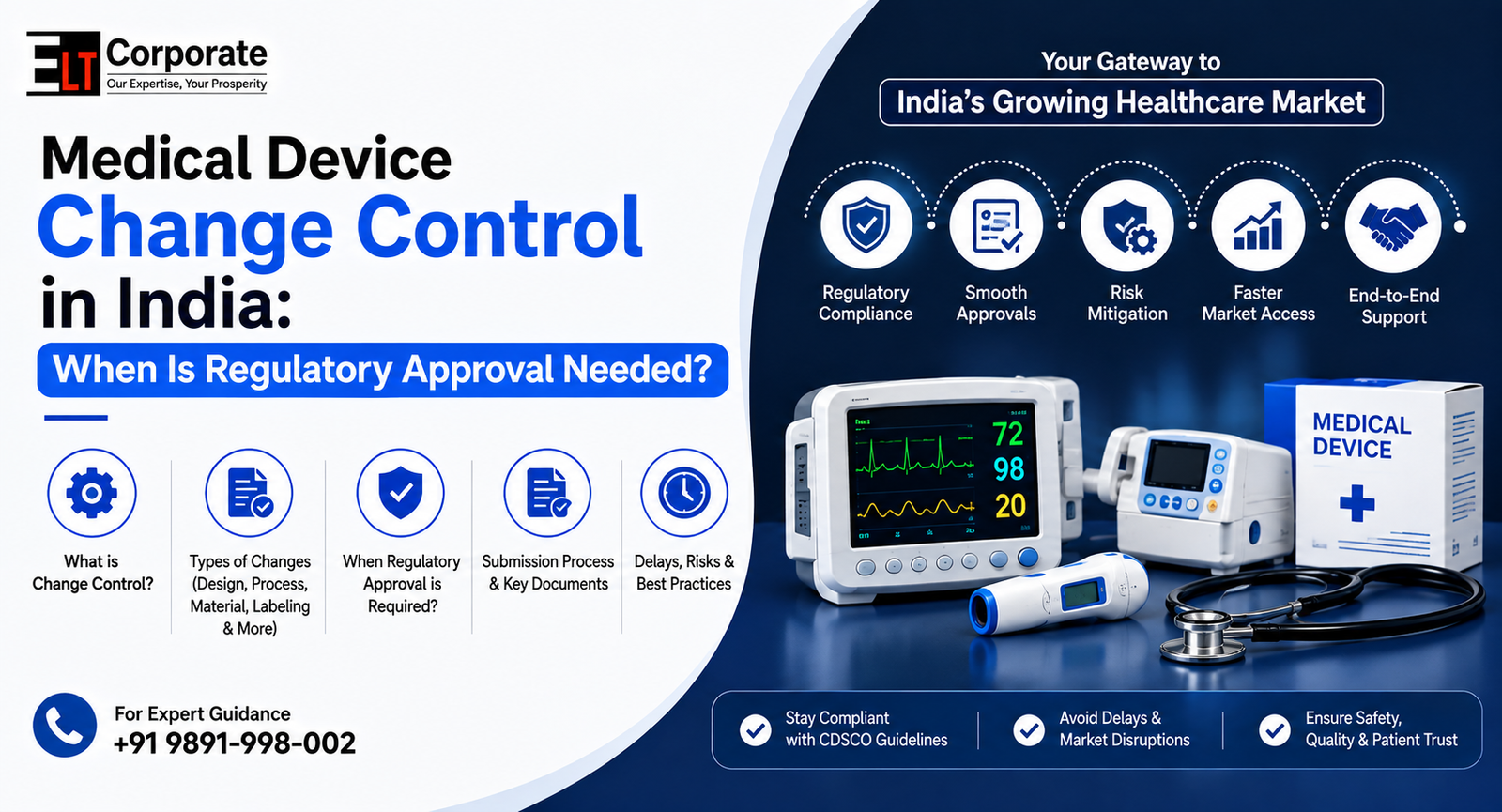
Medical Device Change Control in India is an important part of regulatory compliance for manufacturers and importers who need to make changes to an already approved or licensed medical device. These changes may involve product design, materials, labelling, manufacturing processes, packaging, or the manufacturing site.
A change may appear small from a business perspective, but it can affect product quality, safety, performance, or regulatory compliance. For this reason, companies should assess every proposed change before implementing it.
Under India’s Medical Devices Rules, 2017, certain post-approval changes require submission to the relevant licensing authority, and some major changes require prior approval. The applicable procedure depends on the nature of the change and the relevant regulatory requirements.
In this guide, we explain when approval may be required, which changes are considered major or minor, what documents may be needed, and how ELT Corporate can help businesses manage the process.
What Is Medical Device Change Control in India?
Medical Device Change Control in India refers to the process of identifying, assessing, documenting, and managing changes to a medical device or its approved manufacturing arrangements.
The purpose is to make sure that a change does not negatively affect the device’s safety, quality, performance, or intended use. It also helps businesses determine whether they need to notify the regulatory authority or obtain approval before implementing the change.
For example, a manufacturer may want to change the material used in a medical device, introduce a new model, update product labelling, or move production to another facility. Each change needs to be assessed according to its nature and regulatory impact.
A proper change control process helps businesses maintain accurate records and meet applicable regulatory requirements.
Why Is Medical Device Change Control Important?
Medical Device Change Control in India helps manufacturers review proposed changes and identify the regulatory steps needed to maintain compliance.
Medical devices must continue to meet applicable quality and safety requirements throughout their lifecycle. A change made without proper assessment may create compliance problems or affect the product’s performance.
The main reasons for maintaining a change control process include:
- Patient Safety: Helps identify whether a proposed change could affect the safe use of a medical device.
- Product Quality: Ensures that materials, manufacturing processes, and product specifications remain appropriately controlled.
- Regulatory Compliance: Helps businesses identify whether a submission, notification, or prior approval is required.
- Documentation: Keeps technical records, licences, product information, and change history up to date.
- Risk Management: Helps identify potential risks before a change is implemented.
- Business Continuity: Reduces the risk of avoidable regulatory delays and documentation problems.
A documented process also helps manufacturers explain why a change was made and how its impact was evaluated.
Which Changes Require CDSCO Approval?
Not every change to a medical device requires the same regulatory procedure. Some changes are classified as major, while others may be considered minor under the applicable provisions.
The Sixth Schedule of the Medical Devices Rules, 2017, identifies categories of major and minor post-approval changes. The precise submission procedure should be checked against the current rules, applicable guidance, and the requirements of the concerned licensing authority.
1. Major Changes in Medical Devices
Major changes generally involve aspects that may affect product quality, safety, performance, intended use, or other important approved particulars.
Examples include:
- Changes in the material used to construct the device.
- Design changes that affect product quality, specifications, intended use, performance, or stability.
- Changes to the intended use or indication for use.
- Changes to the sterilisation method.
- Changes to the approved shelf life.
- Changes in the name or address of the domestic manufacturer or manufacturing site.
- Relevant changes to the overseas manufacturer, manufacturing site, or authorised agent for imported devices.
- Certain labelling changes, excluding specified changes to font size, font type, colour, or label design.
- Manufacturing process, equipment, or testing changes that affect device quality.
- Changes to the primary packaging material.
These categories are based on the major-change provisions in the Sixth Schedule. Whether a particular proposal falls into a category should be assessed using the actual facts of the change.
2. Minor Changes in Medical Devices
Minor changes generally involve adjustments that do not affect important product characteristics such as quality, specifications, intended use, performance, or stability.
Examples identified in the Sixth Schedule include:
- Design changes that do not affect the relevant quality or performance characteristics.
- Manufacturing process, equipment, or testing changes that do not affect device quality.
- Changes to packaging specifications, excluding primary packaging material.
A change should not be treated as minor simply because it appears small. The manufacturer should document its assessment and confirm the applicable submission or notification procedure with the licensing authority.
How to Determine Whether Regulatory Approval Is Required
Before implementing a change, manufacturers and importers should review its potential impact and identify the applicable regulatory procedure.
The following steps can help:
- Describe the proposed change: Clearly record what will change and why.
- Review the approved particulars: Compare the proposal with the information in the existing licence and technical documentation.
- Assess product impact: Determine whether the change could affect safety, quality, performance, stability, or intended use.
- Review the applicable rules: Check the Sixth Schedule and relevant CDSCO guidance.
- Determine the change category: Establish whether the change is major or minor under the applicable provisions.
- Confirm the submission route: Identify the relevant licensing authority and the required application or notification procedure.
- Maintain supporting records: Document the assessment, evidence, decisions, and required regulatory correspondence.
The important point is that businesses should complete the regulatory assessment before implementing a change where prior approval is required.
Documents Required for a Medical Device Change Application
The documents required depend on the type of change, the device, and the licensing authority’s checklist. Common supporting documents may include the following.
Company and Licence Documents
- Existing manufacturing or import licence, as applicable.
- Company and manufacturer details.
- Details of the authorised agent, where relevant.
- Existing approved product particulars.
- Details of the manufacturing site.
Technical Documents
- Description of the proposed change.
- Comparison of existing and revised specifications.
- Updated product information or technical documentation.
- Risk assessment and impact evaluation.
- Relevant verification or validation reports.
- Testing reports, where applicable.
- Updated labelling, packaging, or instructions for use, if affected.
Application Documents
- Prescribed post-approval change application or notification.
- Supporting declarations, where required.
- Applicable fee payment details, where relevant.
- Additional documents specified in the relevant CDSCO online checklist.
Not every application requires every document listed above. The final checklist should be prepared according to the change being proposed and the current requirements of the concerned authority.
Medical Device Change Control in India: Application Process
The process generally involves evaluating the proposed change, preparing the supporting records, and following the relevant regulatory submission procedure.
- Identify the change. Record the proposed modification to the device, manufacturing process, packaging, labelling, or manufacturing site.
- Conduct an impact assessment. Evaluate the possible effect on quality, safety, performance, stability, and intended use.
- Determine the regulatory category. Review the applicable major- and minor-change provisions.
- Prepare the documents. Collect the relevant licence details, technical evidence, updated specifications, and other supporting information.
- Submit through the applicable system. Follow the procedure for the concerned licensing authority and change category.
- Respond to regulatory queries. Provide additional information or clarification if requested.
- Implement the change appropriately. Where prior approval is required, wait until the necessary approval has been obtained before implementation.
- Maintain change records. Keep the assessment, supporting evidence, regulatory correspondence, and final decision in the company’s quality records.
CDSCO’s published FAQ addendum states that changes to a licensed device or manufacturing site require a post-approval change submission through the relevant online system. The applicable category determines the further procedure.
What Happens If a Company Makes Changes Without Approval?
Implementing a change without following the applicable regulatory procedure can create compliance risks.
Possible consequences may include:
- Regulatory queries or requests for clarification.
- Delays in licensing or related applications.
- Inconsistencies between approved particulars and actual product information.
- Problems during inspections or regulatory reviews.
- The need to correct documentation or take further compliance action.
- Potential regulatory action where the applicable legal requirements have not been followed.
The consequences depend on the type of change, the applicable rules, and the circumstances. Not every documentation error automatically results in a penalty, but businesses should assess and address any compliance gap promptly.
Common Mistakes to Avoid During Change Control
One common mistake in Medical Device Change Control in India is implementing a regulatory change before checking whether prior approval or notification is required.
Companies can reduce avoidable problems by following a consistent internal procedure.
Common mistakes include:
- Implementing a change before checking whether prior approval is required.
- Treating a major change as minor without adequate assessment.
- Updating product labels without reviewing the regulatory impact.
- Failing to assess the effect of a new material or supplier.
- Making manufacturing-site changes without following the applicable process.
- Submitting incomplete or inconsistent technical documents.
- Failing to maintain records of verification, validation, and risk assessment.
- Assuming that approval for one device automatically covers another device or model.
A documented review process helps businesses identify these issues before a change is introduced.
Medical Device Change Control and Quality Management Systems
A quality management system helps manufacturers manage product changes in a controlled and traceable way. It can include documented procedures for change requests, risk assessment, design review, verification, validation, approvals, and recordkeeping.
For example, a manufacturer planning to introduce a new component should evaluate the component’s specifications, compatibility, potential risks, and effect on the finished device.
Relevant testing and validation should be completed where appropriate.
The regulatory assessment and internal quality approval are related but different responsibilities. Completing an internal change control procedure does not replace any regulatory submission or approval required under Indian law.
How ELT Corporate Can Help with Medical Device Change Control in India
ELT Corporate provides guidance on Medical Device Change Control in India, including document preparation, change assessment, and regulatory application support.
ELT Corporate helps medical device businesses understand regulatory documentation requirements and prepare for applicable licensing procedures.
Our support may include:
- Change Requirement Assessment: Reviewing the proposed change and identifying the relevant regulatory considerations.
- Document Review: Checking existing licence details and supporting technical documentation.
- Application Assistance: Helping organise documents for the relevant post-approval change procedure.
- Regulatory Guidance: Explaining the applicable submission requirements and documentation checklist.
- Query Support: Assisting with the preparation of responses to regulatory queries.
- Compliance Documentation: Helping businesses organise records and identify the next steps in the process.
The scope of support depends on the device, the nature of the proposed change, and the applicable licensing procedure.
If your company is planning a design modification, manufacturing-site change, labelling update, or other product change, ELT Corporate can help you understand the relevant regulatory requirements before you proceed.
Following the correct Medical Device Change Control in India procedure can help manufacturers maintain compliance and reduce the risk of regulatory delays.
Conclusion
Medical Device Change Control in India is an important part of maintaining regulatory compliance after a medical device has been licensed or approved. Every proposed change should be assessed carefully to determine whether it affects product quality, safety, performance, intended use, or approved manufacturing details.
Understanding the distinction between major and minor changes can help businesses follow the correct submission procedure and maintain accurate records. When prior approval is required, companies should obtain it before implementing the change.
For assistance with documentation, post-approval change applications, and regulatory requirements, ELT Corporate can help you understand the applicable process and plan the next steps.
Contact ELT Corporate to discuss your proposed medical device change and the documentation required for your application.
Frequently Asked Questions
1. What is Medical Device Change Control in India?
Medical Device Change Control in India is the process of assessing and documenting changes to a licensed medical device or its manufacturing arrangements to determine their impact and the applicable regulatory requirements.
2. When is CDSCO approval required for a medical device change?
Prior approval may be required for specified major changes under the Medical Devices Rules, 2017. The exact procedure depends on the change category and the concerned licensing authority.
3. What are major changes in medical devices?
Major changes can include certain changes to materials, design, intended use, sterilisation method, approved shelf life, manufacturing site, relevant labelling, primary packaging material, and quality-affecting manufacturing processes.
4. What are minor changes in medical devices?
The Sixth Schedule includes certain design, manufacturing process, equipment, testing, and packaging specification changes that do not affect specified product quality or performance characteristics. The applicable procedure must still be confirmed.
5. Can I change the label of an approved medical device?
It depends on the type of label change. Some specified changes, such as certain font or colour adjustments, are excluded from the listed major-change category. Other changes may require a different regulatory procedure.
6. Is approval required for a medical device manufacturing-site change?
A manufacturing-site change requires the appropriate post-approval procedure. CDSCO guidance states that the necessary approval must be obtained where required by the applicable process.
7. What documents are needed for a post-approval change application?
Documents may include the existing licence, a change description, revised specifications, risk assessment, validation or testing evidence, and updated product information. The exact list depends on the proposed change.
8. Can a company implement a major change before approval?
Where prior approval is required, the company should obtain that approval before implementing the change. Internal quality approval alone does not replace regulatory approval.
9. How long does a medical device change application take?
The timeline depends on the change category, the completeness of the application, the reviewing authority, and any additional information requested. Confirm the expected timeline for the specific application.
10. How can ELT Corporate help with medical device change control?
ELT Corporate can assist with understanding regulatory requirements, reviewing documentation, preparing application materials, and identifying the appropriate next steps for a proposed change.
Comments are closed