Understanding the correct risk category of a medical device is an important step before starting the regulatory process in India. The CDSCO Risk Classification Module helps applicants provide information about their medical device so that its applicable risk category can be determined according to the regulatory framework.
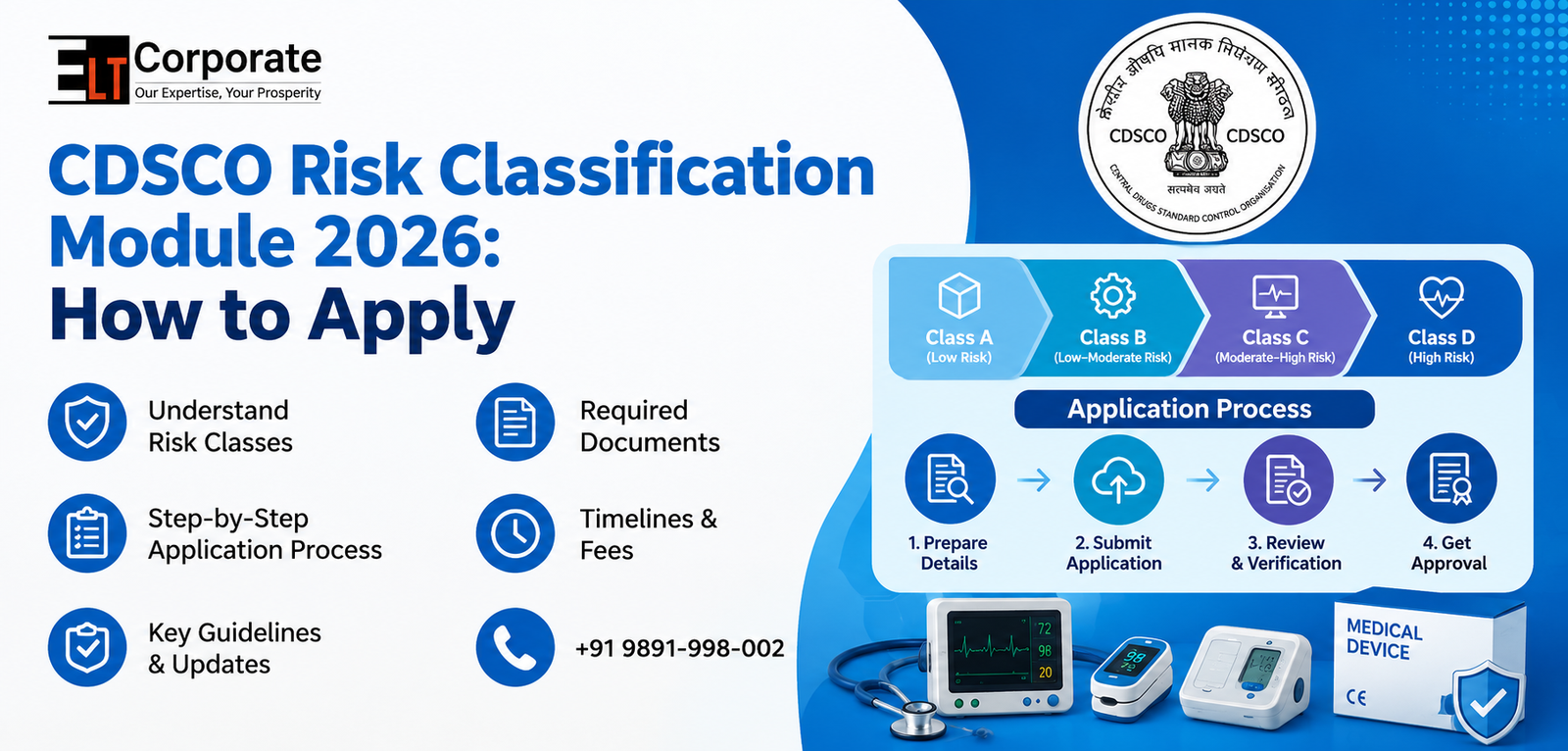
Under the Medical Devices Rules, 2017, medical devices are classified according to risk into Class A, Class B, Class C, and Class D. Class A represents low-risk devices, while Class D represents high-risk devices.
In 2026, manufacturers, importers, and other applicants should pay attention to the latest CDSCO online requirements and classification lists because CDSCO states that the classification list is dynamic and may be updated from time to time.
What Is the CDSCO Risk Classification Module?
The CDSCO Risk Classification Module is part of the online regulatory process for wcklosi bsxlva risk classification.
The purpose is to provide relevant information about a device, such as its intended use and characteristics, so that the applicable classification can be assessed under the regulatory framework.
The classification is important because regulatory requirements can differ by the device’s risk category.
For example:
- Class A – Low Risk
- Class B – Low-Moderate Risk
- Class C – Moderate-High Risk
- Class D – High Risk
These four risk categories are specified by CDSCO under the risk-based classification framework.
Why Is CDSCO Risk Classification Important?
Correct classification is one of the first things a medical-device business should understand before moving ahead with licensing or registration.
An incorrect classification can result in:
- Selection of the wrong regulatory pathway
- Incorrect application information
- Additional queries from the authority
- Delays in processing
- Incorrect documentation
- Compliance problems later
Therefore, applicants should carefully review the device’s intended purpose and applicable classification criteria before submitting information.
CDSCO Risk Classification Module 2026: How to Apply
The application process should be approached carefully because classification depends on the characteristics and intended use of the particular device.
Step 1: Understand Your Medical Device
Start by collecting the basic information about your product.
You should clearly understand:
- Common name of the device
- Brand or trade name
- Intended use
- Intended user
- Mode of operation
- Whether the device is invasive or non-invasive
- Whether it is sterile
- Whether it is reusable or single-use
- Whether it is implantable
- Whether it performs a measuring function
CDSCO‘s medical-device documentation also asks for information concerning device categories and characteristics such as therapeutic or diagnostic use, invasive/non-invasive status, sterile/non-sterile status, and intended use.
Step 2: Identify the Intended Use
The intended use of the device is extremely important.
You should describe what the device is designed to do and how it will be used.
Avoid using vague descriptions. A clear intended-use statement can make the classification assessment easier and can also help maintain consistency across your regulatory documents.
Step 3: Check the Applicable Classification Criteria
The next step is to compare the device with the classification parameters under the Medical Devices Rules, 2017.
CDSCO explains that risk-based classification is based on the parameters provided in Part I of the First Schedule of the MDR 2017.
The classification should therefore not be selected simply because another similar-looking product has a particular class.
Step 4: Check the Latest CDSCO Classification List
Before submitting your application, check the latest classification information published by CDSCO.
This is particularly important because CDSCO states that its risk-classification list is dynamic and may be modified, including additions, deletions, or changes in classification.
CDSCO has also published specific classification lists for certain medical-device categories, including oncology, radiotherapy and interventional radiology, demonstrating why applicants should check the latest available information rather than relying only on an old classification list.
Step 5: Submit the Required Device Information
After identifying the applicable classification information, provide the required product and applicant details through the applicable CDSCO online system.
Make sure that the information is consistent with:
- Product technical documents
- Intended-use statement
- Labelling
- Product specifications
- Manufacturer information
- Existing regulatory documents
Step 6: Review the Application Before Submission
Before submitting, carefully check the information entered into the system.
A simple review can help identify:
- Incorrect product names
- Inconsistent intended use
- Wrong classification information
- Missing documents
- Incorrect manufacturer details
- Technical information that does not match the application
Step 7: Respond to CDSCO Queries if Required
If CDSCO raises a query or requests clarification, the applicant should provide a clear and accurate response within the applicable process.
Do not change technical information casually just to obtain a particular classification. The information submitted should accurately represent the actual medical device.
Medical Device Classification in India: Class A, B, C, and D
The Indian framework uses four risk categories.
| Class | Risk Level | General Meaning |
| Class A | Low Risk | Devices with relatively lower regulatory risk |
| Class B | Low-Moderate Risk | Devices with greater risk than Class A |
| Class C | Moderate-High Risk | Devices requiring higher regulatory control |
| Class D | High Risk | Devices presenting the highest level of risk |
CDSCO officially describes the four categories as low risk, low-moderate risk, moderate-high risk, and high risk, respectively.
What Information Should You Keep Ready?
Before using the CDSCO Risk Classification Module, it is useful to prepare the relevant product information.
Depending on the device and application, this may include:
- Product name
- Device description
- Intended purpose
- Intended user
- Manufacturer details
- Device specifications
- Technical characteristics
- Sterility information
- Measuring function information
- Invasiveness details
- Reusability information
- Existing classification information, if available
- Supporting technical documents
Having these details ready can make the application process easier and reduce avoidable errors.
Common Mistakes to Avoid
Applicants frequently face problems when the information supplied for classification does not properly match the actual product.
1. Choosing a Class Without Checking the Rules
Do not select Class A, B, C or D only because a similar product appears to have that classification.
2. Using an Unclear Intended-Use Statement
The intended purpose should be specific and consistent with the product’s actual function.
3. Using Outdated Classification Information
CDSCO’s classification information can be updated. Always check the latest official information before making a submission.
4. Providing Inconsistent Technical Information
The product description, technical documents, and application information should tell the same story.
5. Ignoring Device-Specific Classification Lists
CDSCO has published category-specific classification lists, so applicants should check whether their product falls within a specific published list.
CDSCO Risk Classification Module vs Medical Device Registration
Risk classification and medical-device registration are related, but they are not the same thing.
Risk classification determines the applicable risk category of the device.
Medical-device registration or licensing involves additional regulatory requirements depending on the product, applicant, and applicable pathway.
Therefore, obtaining or identifying a classification does not automatically mean that the device has received all required regulatory approvals.
For the broader registration process, you can also explore your Medical Device Registration in India resources.
How ELT Corporate Can Help
Understanding the CDSCO Risk Classification Module can be challenging when a product has complex technical characteristics or when the applicable classification is unclear.
ELT Corporate can assist medical-device manufacturers, importers, and businesses with regulatory documentation and CDSCO-related compliance requirements.
Our support can include:
- Understanding the applicable classification pathway
- Reviewing basic product information
- Checking classification-related documentation
- Supporting CDSCO application preparation
- Reviewing regulatory documents
- Assisting with medical-device registration requirements
- Supporting import and manufacturing licensing processes
- Helping identify documentation gaps
- Providing regulatory guidance during the application process
Professional regulatory support can help businesses reduce avoidable mistakes and prepare their applications more systematically.
Conclusion
The CDSCO Risk Classification Module 2026 is an important part of understanding the regulatory pathway for medical devices in India. Medical devices are placed into Class A, B, C, or D based on the applicable risk-based criteria under the Medical Devices Rules, 2017.
Before applying, manufacturers and importers should carefully review the device’s intended use, technical characteristics, and the latest CDSCO classification information. Since CDSCO states that classification information can change, using the latest official information is essential.
If you are unsure about your device’s classification or the next regulatory step, professional assistance can help you prepare the information more accurately.
10 Frequently Asked Questions
Q1. What is the CDSCO Risk Classification Module?
The CDSCO Risk Classification Module is an online regulatory mechanism for providing information related to medical-device classification. It supports the risk-based classification process used under India’s medical-device regulatory framework.
Q2. What are the four CDSCO medical device classes?
Medical devices are generally classified into Class A, Class B, Class C, and Class D, representing low, low-moderate, moderate-high, and high risk, respectively.
Q3. Who classifies medical devices in India?
CDSCO’s FAQ states that the Central Licensing Authority classifies medical devices based on intended use and the applicable parameters in the First Schedule of the Medical Devices Rules, 2017.
Q4. How do I check my medical device classification?
You should review the applicable MDR 2017 classification criteria and the latest risk-classification information published by CDSCO. The classification list can be updated, so applicants should use current information.
Q5. Is CDSCO risk classification required before medical device registration?
Risk classification is an important part of determining the applicable regulatory pathway. However, classification itself should not be treated as equivalent to a medical-device registration or licence.
Q6. Can a Class A device require CDSCO compliance?
Yes. The exact regulatory requirements depend on the type and characteristics of the device. CDSCO also notes specific provisions for certain Class A devices, so the applicable requirements should be checked carefully.
Q7. Can the classification of a medical device change?
Yes. CDSCO states that the risk-classification list is dynamic and may be modified by adding, deleting or changing the class of a medical device.
Q8. What documents are needed for medical device classification?
The exact requirements depend on the application and device. Generally, applicants should have accurate product information, intended use, manufacturer details, and technical characteristics available.
Q9. Can a foreign manufacturer apply for CDSCO medical device classification?
Foreign manufacturers may need to follow the applicable Indian regulatory pathway through the relevant Indian regulatory structure and authorized entities, depending on the nature of the application. The exact requirements should be checked for the specific device.
Q10. Can ELT Corporate help with CDSCO risk classification?
Yes. ELT Corporate can provide support with medical-device regulatory documentation, classification-related preparation, and the broader CDSCO registration and licensing process.
Comments are closed