
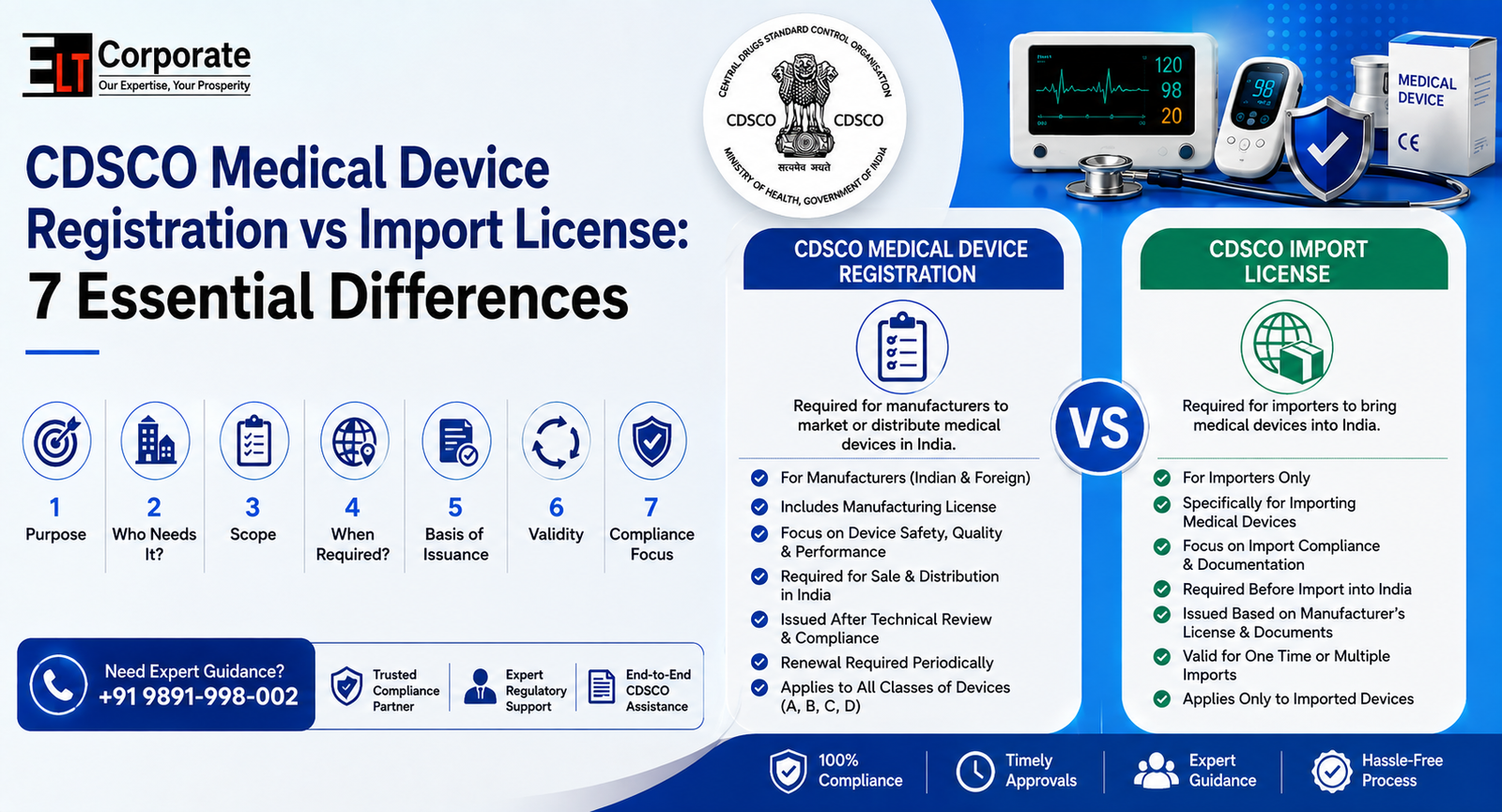
CDSCO Medical Device Registration vs Import License is an important topic for manufacturers, importers, foreign medical device companies, and businesses planning to enter the Indian healthcare market. Although these terms are sometimes used together, they can represent different regulatory requirements under India’s medical device framework.
Understanding CDSCO Medical Device Registration vs Import License can help businesses identify the correct regulatory pathway, prepare the required documents, and reduce the risk of unnecessary regulatory delays.
The Central Drugs Standard Control Organization (CDSCO) regulates medical devices in India under the Medical Devices Rules, 2017. The applicable requirements can vary according to the type of medical device, its risk classification, manufacturing location, and intended business activity.
For manufacturers and importers, understanding the difference between registration-related requirements and an import license is an important step toward proper regulatory compliance.
What Is CDSCO Medical Device Registration?
CDSCO medical device registration is commonly used to describe the regulatory process through which a medical device, manufacturer, importer, or related business obtains the applicable registration, approval, or license under India’s medical device regulatory framework.
The exact regulatory requirement depends on the product and its classification.
Medical devices in India are generally classified into four risk categories:
- Class A – Low Risk
- Class B – Low-Moderate Risk
- Class C – Moderate-High Risk
- Class D – High Risk
The applicable requirements may differ depending on the device classification and the nature of the activity being undertaken.
Therefore, before beginning the application process, manufacturers and importers should determine the correct device classification and identify the applicable CDSCO regulatory pathway.
What Is a CDSCO Import License?
A CDSCO import license is the applicable regulatory authorization required for importing regulated medical devices into India.
For applicable medical devices regulated under the Medical Devices Rules, 2017, the import license application is generally submitted through Form MD-14, while the import license is issued in Form MD-15, subject to fulfilment of the applicable requirements.
In practical terms:
MD-14 = Application for Import License
MD-15 = Import License
This process is particularly relevant to foreign manufacturers that intend to supply their medical devices in the Indian market through an Indian authorised agent.
Understanding CDSCO Medical Device Registration vs Import License is therefore important because registration or approval requirements and import authorization should not automatically be treated as identical.
CDSCO Medical Device Registration vs Import License: 7 Key Differences
When comparing CDSCO Medical Device Registration vs Import License, businesses should consider the purpose and regulatory pathway applicable to their specific product.
1. Regulatory Purpose
The first major difference relates to the regulatory purpose.
CDSCO medical device registration or approval requirements focus on fulfilling the applicable regulatory requirements for the medical device, manufacturer, importer, or relevant business activity.
An import license, on the other hand, specifically relates to the authorization required for importing applicable medical devices into India.
2. Applicability
The applicable registration, approval, or licensing requirement depends on the medical device, its classification, and the nature of the business activity.
An import license becomes particularly important when a business intends to import regulated medical devices from outside India.
This makes CDSCO Medical Device Registration vs Import License an important distinction for foreign manufacturers and Indian importers.
3. Application Form
For applicable medical device imports, Form MD-14 is generally used for submitting the import license application.
After the applicable regulatory requirements are fulfilled, the import license is issued in Form MD-15.
Businesses should therefore understand the role of these forms before preparing their application.
4. Indian Authorised Agent
Foreign manufacturers may need to work through an appropriate Indian authorised agent for the applicable CDSCO regulatory process.
The Indian authorised agent can undertake relevant regulatory responsibilities in India according to the applicable requirements.
This is an important consideration when evaluating CDSCO Medical Device Registration vs Import License for overseas manufacturers.
5. Documentation
Regulatory documentation can vary depending on the product and application.
Depending on the applicable pathway, businesses may need documents such as:
- Manufacturer details
- Indian authorised agent details
- Power of Attorney
- Device Master File
- Plant Master File, where applicable
- Free Sale Certificate or Marketing Authorisation
- Quality Management System certificate
- Declaration of Conformity
- Product specifications
- Product labels
- Instructions for Use
- Manufacturing information
- Existing regulatory approvals and certificates, where applicable
Incomplete or inconsistent documentation may result in regulatory queries and can delay the application process.
6. Regulatory Review
The CDSCO application and supporting documentation may be reviewed by the competent regulatory authority.
During the review, additional information or clarification may be requested where necessary.
Businesses should therefore ensure that the information submitted is accurate, consistent, complete, and relevant to the applicable regulatory pathway.
7. Compliance After Approval
Receiving an applicable authorization does not necessarily mean that all future regulatory obligations are complete.
Manufacturers and importers should continue to comply with relevant regulatory and post-market requirements.
This is why businesses should evaluate CDSCO Medical Device Registration vs Import License based on their complete regulatory obligations rather than looking at only one approval or license
Why Is CDSCO Compliance Important?
Understanding CDSCO Medical Device Registration vs Import License can help businesses determine the appropriate regulatory route before manufacturing, importing, or marketing medical devices in India.
Medical devices are directly associated with healthcare, diagnosis, treatment, and patient care. Regulatory compliance helps ensure that applicable safety, quality, performance, and documentation requirements are addressed.
Failure to meet applicable requirements may result in:
- Regulatory queries
- Approval delays
- Import-related difficulties
- Restrictions on marketing or distribution
- Compliance actions by regulatory authorities
- Financial and business risks
Businesses should therefore assess their regulatory obligations before introducing a medical device into the Indian market.
Key Requirements for a CDSCO Medical Device Import License
The requirements for an import license depend on the medical device and its regulatory classification. However, an applicable import application may require several categories of information and documentation.
Medical Device Details
Businesses may need to provide information about the device, including:
- Intended use
- Specifications
- Device classification
- Model numbers
- Product variants
Foreign Manufacturer Information
Details about the foreign manufacturer, manufacturing facility, and applicable manufacturing or quality certifications may be required.
Indian Authorised Agent
A foreign manufacturer may need an authorised Indian agent to undertake applicable regulatory responsibilities in India.
Technical Documentation
Technical documentation may include the Device Master File, product specifications, manufacturing information, and other supporting documents required for the applicable application.
Quality and Regulatory Documents
Depending on the application, relevant quality-management certificates, Free Sale Certificates, Marketing Authorisations, declarations, and other regulatory documents may need to be submitted.
Labelling and Instructions for Use
Product labels and Instructions for Use should comply with applicable Indian regulatory requirements.
Documents Required for a CDSCO Import License
When evaluating CDSCO Medical Device Registration vs Import License, documentation is one of the most important areas businesses should understand.
Depending on the product and regulatory pathway, documents may include:
- Manufacturer details
- Indian authorised agent details
- Power of Attorney
- Device Master File
- Plant Master File, where applicable
- Free Sale Certificate or Marketing Authorisation
- Quality Management System certificate
- Declaration of Conformity
- Product specifications
- Product labels
- Instructions for Use
- Manufacturing information
- Existing regulatory approvals and certificates, where applicable
Businesses should ensure that documents are complete, consistent, and current before submission.
How to Apply for a CDSCO Import License
The applicable import licensing process generally involves several important steps.
Step 1: Identify the Medical Device
Determine whether the product falls within the medical device definition and applicable regulatory framework in India.
Step 2: Determine Device Classification
Identify whether the device is classified as Class A, Class B, Class C, or Class D based on the applicable classification rules.
Step 3: Identify the Regulatory Pathway
Determine whether the product requires an import license, registration, exemption, or another applicable regulatory approval.
Step 4: Appoint an Indian Authorised Agent
Where applicable, a foreign manufacturer should appoint an authorised Indian agent and complete the required authorization documentation.
Step 5: Prepare Regulatory Documents
Prepare the required technical, manufacturing, quality, product, and regulatory documents.
Step 6: Submit Form MD-14
For an applicable medical device import license, the application is submitted through Form MD-14 along with the required documents and applicable fees.
Step 7: CDSCO Review
The application and supporting documents are reviewed by the competent regulatory authority. Additional information or clarification may be requested where necessary.
Step 8: Obtain Form MD-15
Once the applicable requirements are fulfilled, the import license is issued in Form MD-15.
Step 9: Maintain Compliance
After receiving the applicable authorization, businesses should continue following relevant regulatory and post-market requirements.
Who Needs a CDSCO Import License?
The requirement depends on the medical device and applicable regulatory provisions.
In general, businesses importing regulated medical devices from outside India should determine whether a CDSCO import license is required before commercial importation.
Foreign manufacturers may also need to work through an appropriate Indian authorised agent depending on the applicable regulatory pathway.
This makes CDSCO Medical Device Registration vs Import License particularly relevant to overseas manufacturers entering the Indian market.
CDSCO Medical Device Registration vs Import License: Example
Consider a medical device manufacturer based in the United States that wants to sell its medical device in India.
The company should not simply ship the product to India and begin commercial sales.
Instead, it should first determine:
Is the product considered a medical device under Indian law?
Then:
What is the risk classification of the device?
After that:
What regulatory approval or license is applicable?
If the product requires an import license, the appropriate application and supporting documentation should be prepared and submitted through the applicable CDSCO process.
This example demonstrates why CDSCO Medical Device Registration vs Import License should be evaluated carefully instead of assuming that both terms mean exactly the same thing.
Common Mistakes to Avoid
Businesses dealing with medical devices should avoid several common compliance mistakes.
1. Using Outdated Information
Medical device regulations and regulatory procedures can change. Businesses should refer to the latest applicable CDSCO requirements.
2. Choosing the Wrong Device Classification
Incorrect classification can result in selecting the wrong regulatory pathway and may cause unnecessary delays.
3. Submitting Incomplete Documents
Missing technical or regulatory documents may lead to queries during regulatory review.
4. Ignoring Indian Labelling Requirements
Imported medical devices should comply with applicable Indian labelling and packaging requirements.
5. Assuming Registration Means Import Permission
A business should verify whether a separate import authorization is required for its particular medical device and business activity.
Understanding CDSCO Medical Device Registration vs Import License can help businesses avoid this common misunderstanding.
Why Choose ELT Corporate for CDSCO Compliance?
Medical device compliance requires careful evaluation of product classification, technical documentation, regulatory requirements, and application procedures.
ELT Corporate assists manufacturers, importers, foreign medical device companies, and other businesses with regulatory services related to:
- Medical device classification
- CDSCO medical device registration
- CDSCO import license
- Form MD-14 application
- Form MD-15 import license
- Regulatory documentation
- Indian authorised agent requirements
- CDSCO compliance support
Our approach focuses on making the regulatory process easier to understand and helping businesses prepare their applications accurately.
Before beginning the application process, businesses should evaluate CDSCO Medical Device Registration vs Import License according to their medical device, business activity, and applicable regulatory requirements.
Conclusion
Understanding CDSCO Medical Device Registration vs Import License is important for manufacturers, importers, and foreign medical device companies planning to enter the Indian market.
The applicable regulatory pathway depends on the type of medical device, its risk classification, manufacturing location, and intended activity in India.
For applicable imports under the Medical Devices Rules, 2017, Form MD-14 is used for the import license application, while Form MD-15 is the resulting import license.
Businesses should carefully assess their medical device and confirm the applicable CDSCO requirements before importing, manufacturing, or marketing the product in India.
ELT Corporate can assist businesses with understanding applicable requirements, preparing documentation, and managing relevant CDSCO compliance activities.
Frequently Asked Questions
Q1. What is the difference between CDSCO medical device registration and an import license?
CDSCO Medical Device Registration vs Import License refers to two regulatory concepts that may have different purposes. Registration or approval requirements address applicable regulatory compliance, while an import license specifically authorizes the applicable import of medical devices into India.
Q2. What is Form MD-14?
Form MD-14 is the application form used for applying for an import license for applicable medical devices under the Medical Devices Rules, 2017.
Q3. What is Form MD-15?
Form MD-15 is the import license issued for applicable medical devices after the relevant regulatory application process.
Q4. Is CDSCO registration mandatory for every medical device?
The applicable requirement depends on the medical device, its classification, and the relevant provisions under the Medical Devices Rules, 2017. Businesses should check the specific regulatory status of their product.
Q5. Do imported medical devices require a CDSCO import license?
Applicable regulated medical devices imported into India generally require the appropriate import authorization. The exact requirement depends on the product and applicable regulations.
Q6. Who can apply for a CDSCO medical device import license?
An eligible applicant or authorised Indian agent can apply according to the applicable requirements under the Medical Devices Rules, 2017.
Q7. What documents are required for a CDSCO import license?
Documents may include a Power of Attorney, Device Master File, manufacturer information, quality certificates, regulatory certificates, product specifications, labels, Instructions for Use, and other applicable documents.
Q8. What are the different medical device classes in India?
Medical devices are generally classified into Class A, Class B, Class C, and Class D, based on their associated risk.
Q9. Can a foreign manufacturer sell medical devices directly in India?
A foreign manufacturer must follow applicable Indian regulatory requirements before commercially marketing its medical devices in India. An Indian authorised agent may also be required depending on the regulatory pathway.
Q10. Can ELT Corporate help with CDSCO medical device import licensing?
Yes. ELT Corporate can assist with device classification, documentation, Form MD-14 preparation, import licensing support, regulatory communication, and related CDSCO compliance services.
Comments are closed