
Introduction
Indian manufacturers are increasingly exploring international markets to expand their businesses and reach customers in the United States. The USA is one of the world’s major markets for medical devices, pharmaceuticals, food products, cosmetics, and other regulated products. However, companies planning to enter this market must understand the applicable requirements of the United States Food and Drug Administration.
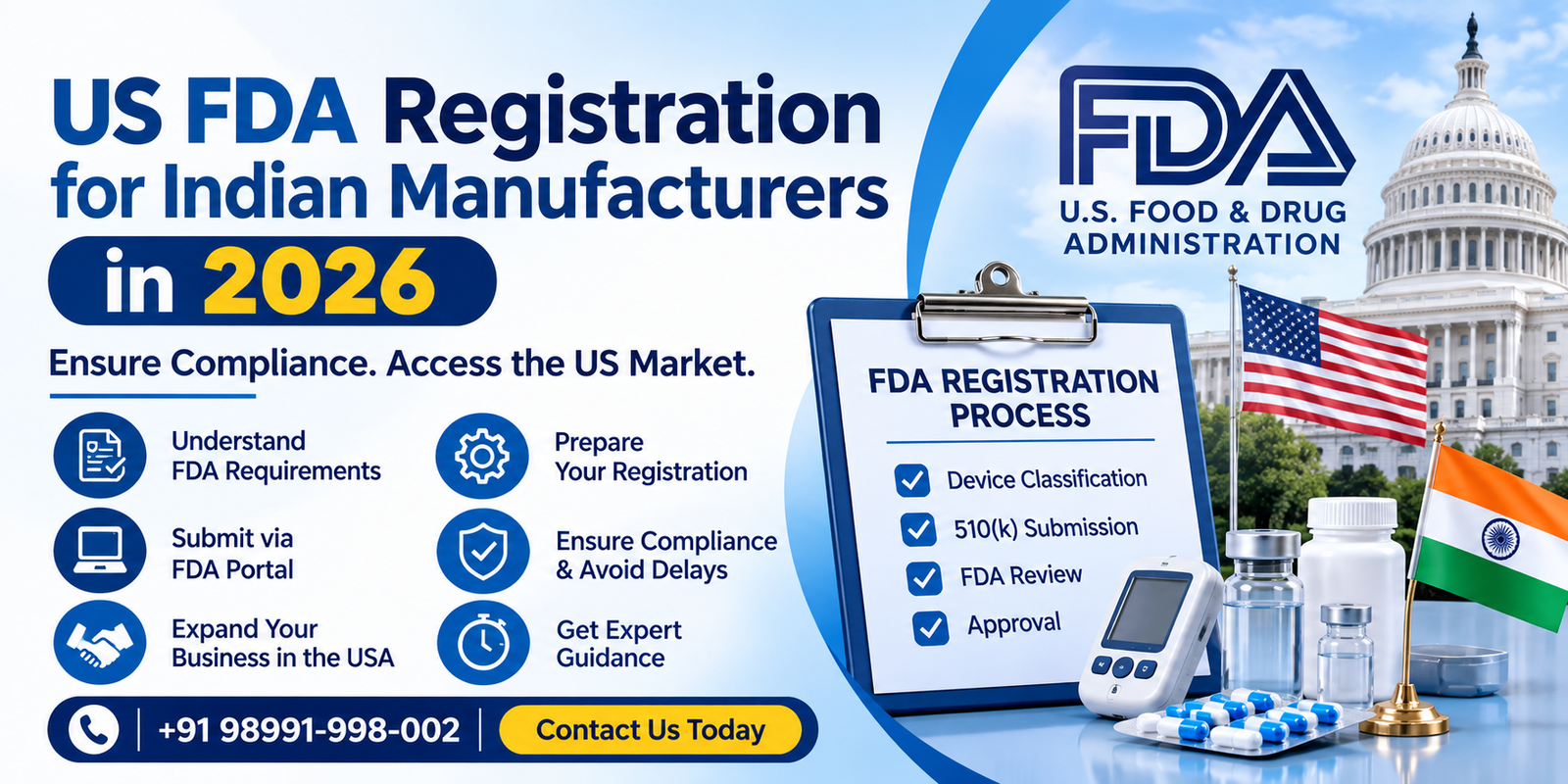
US FDA Registration for Indian Manufacturers is an important compliance consideration for businesses planning to manufacture, export, or distribute regulated products in the United States. Depending on the product category, manufacturers may need to complete establishment registration, product listing, obtain applicable approvals, or meet specific regulatory requirements before marketing their products.
For Indian manufacturers, understanding the FDA registration process can help reduce compliance mistakes, avoid unnecessary delays, and prepare their businesses for international trade.
In this guide, ELT Corporate explains the US FDA requirements, the registration process, required documents, costs, and key compliance considerations for Indian manufacturers in 2026.
What Is US FDA Registration for Indian Manufacturers?
The United States Food and Drug Administration is a government agency responsible for regulating products such as medical devices, medicines, food, cosmetics, and certain other products sold in the United States.
For Indian businesses, US FDA Registration for Indian Manufacturers refers to completing the applicable regulatory registration, product listing, notification, or approval requirements before entering the US market.
The requirements depend on the type of product being exported.
For example:
- Medical devices: Establishment registration, device listing, and applicable premarket authorization.
- Pharmaceutical products: Drug establishment registration, drug listing and applicable regulatory requirements.
- Food products: Food facility registration and applicable food safety requirements.
- Cosmetics: Facility registration and cosmetic product listing under MoCRA, where applicable.
- Radiation-emitting products: Applicable product reporting and radiation safety requirements.
It is important to understand that FDA registration does not automatically mean that a product is FDA-approved. Registration, listing and product approval are different regulatory activities.
Why Is US FDA Registration Important for Indian Manufacturers?
Indian manufacturers planning to export regulated products to America should understand the relevant FDA requirements before starting commercial activities.
Here are some important reasons why compliance matters:
1. Access to the US Market
Completing the applicable regulatory requirements helps manufacturers prepare their products and facilities for entry into the US market.
2. Better Business Opportunities
US FDA compliance can help Indian manufacturers build relationships with American importers, distributors, and business partners.
3. Regulatory Compliance
Following applicable FDA requirements helps businesses reduce the risk of regulatory issues, import delays and other compliance problems.
4. Improved Business Credibility
Proper documentation and regulatory compliance can make it easier for manufacturers to demonstrate their preparedness to international business partners.
5. Better Export Planning
Understanding FDA requirements in advance helps businesses prepare the necessary documents, product information and quality systems before exporting.
Which Indian Manufacturers Need US FDA Registration in 2026?
Not every business follows the same registration process. The requirements depend on the product category, manufacturing activity and intended US market.
The following businesses may need to complete specific FDA requirements:
| Business category | Relevant FDA requirements |
| Medical device manufacturers | Establishment registration, device listing and applicable device authorization |
| Pharmaceutical manufacturers | Drug establishment registration and drug listing |
| Food manufacturers | Food facility registration, where required |
| Cosmetic manufacturers | MoCRA facility registration and product listing, where applicable |
| Medical equipment manufacturers | Applicable medical device or radiation safety requirements |
| Contract manufacturers | Requirements based on their actual manufacturing and regulatory activities |
For example, an Indian company manufacturing surgical instruments may need to follow medical device regulations, while an Indian food processing company may need to register its food facility.
The first step is identifying the correct regulatory category rather than applying for a general FDA registration.
US FDA Registration for Indian Manufacturers: Medical Device Requirements
Medical devices are an important export category for Indian manufacturers. Companies manufacturing surgical instruments, diagnostic equipment, implants, monitoring equipment, and other medical devices should understand the FDA’s medical device regulatory framework.
For foreign medical device manufacturers, the basic requirements may include:
1. FDA Establishment Registration
Manufacturers and other establishments covered by the regulations must register their establishments with the FDA.
Medical device establishment registration is generally renewed annually.
2. Medical Device Listing
Manufacturers must list applicable medical devices manufactured at their establishments and provide information about the activities performed.
3. US Agent Appointment
Foreign medical device establishments must designate a US Agent who meets FDA requirements. The agent acts as a communication contact between the FDA and the foreign establishment.
4. FDA 510(k) Clearance or PMA Approval
Some medical devices require premarket authorization before they can be marketed in the United States.
Depending on the device classification, the applicable route may include:
- 510(k) Premarket Notification
- Premarket Approval
- De Novo classification
- Exemption from premarket submission, where applicable
5. Quality Management System
Manufacturers must comply with applicable FDA quality system requirements. The Quality Management System Regulation (QMSR), which became effective on February 2, 2026, incorporates ISO 13485:2016 by reference, with additional FDA requirements.
6. Labelling and Post-Market Compliance
Manufacturers must follow applicable labelling, adverse event reporting, complaint handling, and other post-market requirements.
These requirements can vary depending on the product and its classification.
US FDA Registration for Indian Manufacturers: Step-by-Step Process
The registration process depends on the product category. For medical device manufacturers, the following steps provide a general overview.
Step 1: Identify Your Product Category
First, identify the category of the product you want to export to the United States.
For medical devices, determine the applicable FDA classification and product code.
Step 2: Check Applicable FDA Requirements
Check whether your product is exempt from premarket submission or requires 510(k), De Novo or PMA authorization.
Step 3: Prepare Your Company Information
Collect the manufacturer’s legal name, manufacturing facility address, contact details and other applicable establishment information.
Step 4: Appoint a US Agent
Foreign medical device manufacturers must designate an eligible US Agent with a physical US address.
Step 5: Complete Establishment Registration
Submit the applicable establishment registration information through the FDA’s electronic registration system.
Step 6: Complete Device Listing
List the applicable medical devices and provide the required product and activity information.
Step 7: Maintain Regulatory Compliance
After registration, manufacturers must maintain accurate information, complete applicable renewals, and comply with continuing FDA requirements.
Important: Establishment registration and device listing do not replace required premarket authorization. A manufacturer must complete the applicable authorization before marketing a device when such authorization is required.
Documents Required for US FDA Registration for Indian Manufacturers
The documents depend on the product category and the applicable FDA regulations.
For medical device manufacturers, commonly relevant information and documents may include:
| Document or information | Purpose |
| Company incorporation details | Identifies the legal business entity |
| Manufacturing facility address | Identifies the manufacturing location |
| Company contact details | Establishes official communication |
| Product description | Explains the medical device |
| Device classification details | Helps determine regulatory requirements |
| Product specifications | Provides technical product information |
| Quality management documentation | Demonstrates applicable quality system arrangements |
| Labelling information | Supports regulatory labelling compliance |
| US Agent details | Identifies the US communication representative |
| Premarket submission information | Provides applicable 510(k), De Novo, or PMA details |
Additional documents may be required depending on the device, manufacturing activity, and regulatory pathway.
US FDA Registration Fees for Indian Manufacturers in 2026
The cost of FDA registration depends on the product category and the regulatory services required.
For example, medical device establishment registration has an annual FDA user fee. Other regulatory activities, such as premarket submissions, may involve separate fees.
The overall project cost may depend on:
- Type and classification of the product.
- Number of manufacturing establishments.
- Number of products requiring listing.
- Premarket authorization requirements.
- US Agent arrangements.
- Documentation and quality system preparation.
- Professional consultancy charges.
Important: FDA fees change periodically. Manufacturers should check the official FDA fee schedule for the applicable financial year before making payments. Do not assume that every product category has the same registration fee.
Common Mistakes Indian Manufacturers Should Avoid
Indian companies sometimes face unnecessary regulatory complications because they do not understand the difference between registration, listing, and product authorization.
Avoid these common mistakes:
- Assuming FDA registration means FDA product approval.
- Selecting the wrong product classification.
- Providing incorrect manufacturing facility details.
- Not appointing an eligible US Agent where required.
- Ignoring applicable product listing requirements.
- Using incorrect product labelling.
- Not maintaining quality management documentation.
- Missing annual registration or other applicable renewal deadlines.
Proper regulatory planning can help manufacturers avoid these problems and prepare for international business operations.
US FDA Registration for Indian Manufacturers: Important 2026 Compliance Updates
Manufacturers planning exports in 2026 should pay attention to the following regulatory developments.
1. Medical Device QMSR
The FDA’s Quality Management System Regulation became effective on February 2, 2026. It aligns the US medical device quality system framework more closely with ISO 13485:2016 while retaining additional FDA requirements.
2. Annual Medical Device Establishment Registration
Applicable medical device establishments must complete annual registration and pay the relevant registration fee unless an applicable waiver is granted.
3. MoCRA Cosmetic Registration
Cosmetic manufacturers and processors subject to MoCRA must register their facilities and renew registrations every two years. The responsible person must also list applicable cosmetic products and update the information annually.
4. Drug Establishment Registration
Foreign drug establishments subject to FDA registration requirements must register before their drugs are offered for import into the United States and follow applicable annual renewal requirements.
These requirements are product-specific. Businesses should verify the latest official guidance before submitting applications.
Difference Between FDA Registration and FDA Approval
Many Indian manufacturers believe that obtaining an FDA registration number means their products are approved for sale in America. However, these are two different things.
| FDA registration | FDA approval or clearance |
| Records an eligible establishment with the FDA | Authorizes or clears a product through an applicable regulatory pathway |
| Provides establishment information | Evaluates product-specific regulatory submissions |
| May involve product listing | May involve 510(k), De Novo or PMA |
| Does not automatically authorize marketing | Must be obtained when required for the product |
For example, a medical device manufacturer may complete establishment registration and device listing, but still need 510(k) clearance before marketing a device that requires it.
How Long Does US FDA Registration Take?
There is no single processing timeline for every product category.
The timeline depends on the registration type, completeness of information, product classification, and whether additional FDA review or premarket authorization is required.
Some establishment registration activities may be completed relatively quickly after a valid submission, while product clearance or approval can take considerably longer.
Indian manufacturers should plan their export activities in advance and avoid assuming that all FDA procedures can be completed within a fixed number of days.
Why Choose ELT Corporate for US FDA Registration Assistance?
Entering the American market requires proper regulatory planning, accurate documentation, and an understanding of applicable FDA requirements.
ELT Corporate provides regulatory consultancy support to Indian manufacturers and businesses planning to expand into international markets.
Our assistance can include:
- Regulatory Requirement Assessment: Understanding the applicable FDA requirements based on your product category.
- Documentation Assistance: Helping organise company, product, and manufacturing information.
- Medical Device Registration Guidance: Supporting manufacturers in understanding establishment registration and device listing requirements.
- US Agent Coordination: Guidance regarding the appointment and role of a US Agent.
- FDA Compliance Guidance: Assistance in understanding applicable product labelling and quality management requirements.
- Application Support: Guidance on preparing relevant registration information and submissions.
- Regulatory Updates: Helping businesses understand important changes in applicable FDA requirements.
If you are planning US FDA Registration for Indian Manufacturers, ELT Corporate can help you understand the relevant compliance pathway and prepare your business for the US market.
Contact ELT Corporate to discuss your product category and regulatory requirements before starting the registration process.
Conclusion
The United States offers significant opportunities for Indian manufacturers, but entering this market requires careful regulatory preparation. Businesses must understand the FDA requirements applicable to their products, manufacturing facilities and intended activities.
US FDA Registration for Indian Manufacturers is not a single process that applies equally to every industry. Medical devices, pharmaceuticals, food products, and cosmetics have different regulatory frameworks.
Before exporting, manufacturers should identify their product category, check the applicable registration and approval requirements, prepare the necessary documents, and maintain ongoing compliance.
With proper planning and professional regulatory guidance from ELT Corporate, Indian businesses can better understand the requirements and prepare for expanding into the US market.
Frequently Asked Questions
Q1. What is US FDA Registration for Indian Manufacturers?
US FDA Registration for Indian Manufacturers refers to completing the applicable FDA establishment registration, product listing, notification or approval requirements for products intended for the US market. The process depends on the product category and applicable regulations.
Q2. Can an Indian company apply for FDA registration?
Yes. Eligible Indian manufacturers can complete applicable FDA registration requirements for their establishments and products. Foreign establishments must meet the relevant US regulatory requirements.
Q3. Is FDA registration mandatory for Indian medical device manufacturers?
Foreign medical device establishments covered by the applicable regulations generally need to register with the FDA, list applicable devices, and meet relevant premarket authorization and other regulatory requirements.
Q4. Do Indian manufacturers need a US Agent?
Foreign medical device establishments must designate a US Agent. Foreign drug establishments subject to FDA requirements also need to provide applicable US Agent information. Requirements for other product categories may differ.
Q5. What documents are required for FDA registration?
Commonly required information may include company details, manufacturing facility information, product descriptions, classification details, labelling information, and US Agent details, depending on the product category.
Q6. How much does FDA registration cost in 2026?
There is no universal FDA registration fee. Costs depend on the product category, applicable FDA user fees, required submissions, and professional consultancy services. Manufacturers should check the current FDA fee schedule.
Q7. Does FDA registration mean that my product is FDA-approved?
No. Establishment registration and product listing do not automatically mean that a product is FDA-approved. Certain products require separate clearance, approval, or other regulatory authorization before marketing.
Q8. Can ELT Corporate help Indian manufacturers with FDA registration?
Yes. ELT Corporate can provide regulatory consulting and documentation guidance to Indian manufacturers, including help understanding applicable FDA registration, product listing, and compliance requirements.
Comments are closed