
Introduction
Medical device manufacturers must maintain consistent product quality, follow safety procedures, and meet applicable regulatory requirements. Whether you manufacture surgical instruments, diagnostic equipment, implants, or other medical devices, a reliable quality management system helps you control manufacturing processes and reduce quality-related risks.
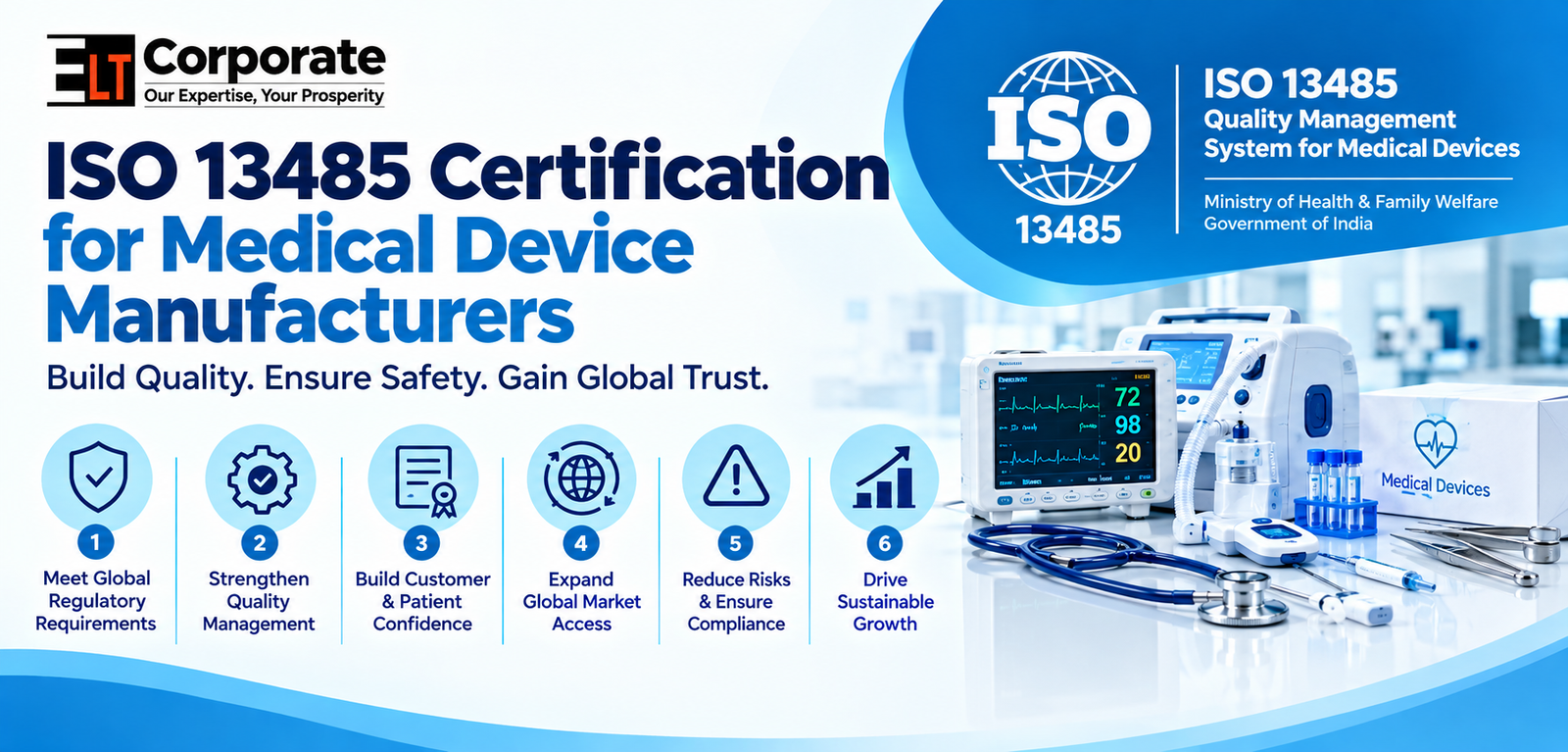
ISO 13485 Certification for Medical Device Manufacturers is an internationally recognised quality management standard designed specifically for the medical device industry. It helps businesses establish clear procedures for product design, manufacturing, inspection, documentation, and customer feedback.
For manufacturers in India, understanding ISO 13485 is particularly important when planning regulatory compliance, CDSCO licensing, and expansion into international markets. ELT Corporate helps businesses understand the certification process and prepare the required quality and regulatory documentation.
What Is ISO 13485 Certification for Medical Device Manufacturers?
ISO 13485 is an international standard for a Quality Management System (QMS) used by organisations involved in medical device design, production, installation, servicing, and related activities.
Certification demonstrates that an organisation’s quality management system has been assessed against the applicable standard by a certification body. It does not automatically mean
that every product is approved by a regulator or that the manufacturer has obtained all required licences.
Manufacturers Important?
A medical device must perform as intended and meet relevant safety and quality requirements. A well-implemented quality management system helps manufacturers manage these responsibilities systematically.
Key benefits include:
- Consistent product quality: Establishes defined procedures for manufacturing and inspection.
- Better risk management: Helps identify and address potential product and process risks.
- Improved documentation: Keeps quality records, procedures, and production information organised.
- Regulatory preparation: Supports the preparation of quality documentation for applicable regulatory processes.
- Customer confidence: Demonstrates a structured commitment to quality management.
- Business opportunities: Can support supplier qualification and market-entry requirements, depending on the customer and country.
ISO 13485 is a quality management standard, not a guarantee of product safety or regulatory approval. Its effectiveness depends on proper implementation and ongoing compliance.
Who Can Apply for ISO 13485 Certification?
ISO 13485 Certification for Medical Device Manufacturers may be suitable for organisations involved in different stages of the medical device supply chain.
Eligible types of organisations may include:
- Medical device manufacturers.
- Medical equipment and surgical instrument manufacturers.
- In-vitro diagnostic (IVD) device manufacturers.
- Medical device design and development companies.
- Contract manufacturers and outsourced production facilities.
- Organisations providing installation or servicing of medical devices.
- Suppliers whose activities fall within the applicable certification scope.
Small businesses and startups can also work towards certification. The quality management system should be appropriate to their activities, products, risks, and regulatory obligations.
What Are the Main Requirements for ISO 13485 Certification?
Before applying, manufacturers should establish a quality management system that reflects their actual business operations.
1. Quality Management System Documentation
Prepare documented procedures, quality objectives, responsibilities, and records that demonstrate how the organisation controls its processes.
2. Standard Operating Procedures
Create procedures for activities such as purchasing, production, inspection, equipment maintenance, document control, and handling non-conforming products.
3. Risk Management
Identify potential risks associated with the medical device and manufacturing process. Establish appropriate controls and maintain supporting records.
4. Product Traceability
Maintain records that help trace relevant materials, components, production batches, inspections, and finished products.
5. Employee Training
Ensure employees understand their responsibilities and have the necessary skills to perform quality-related activities.
6. Internal Audits and Management Reviews
Conduct internal audits to identify gaps and review the effectiveness of the quality management system. Management should evaluate performance and determine necessary improvements.
7. Corrective and Preventive Actions
Establish a process to investigate problems, identify their causes, implement corrective actions, and verify whether those actions have been effective.
What Documents Are Required for ISO 13485 Certification?
Proper documentation is an important part of ISO 13485 Certification for Medical Device Manufacturers, as it helps demonstrate that quality procedures are implemented and maintained.
The exact document list depends on the organisation’s scope, products, manufacturing activities, and certification body. Commonly relevant documents include:
- Certificate of incorporation or business registration.
- Company and manufacturing facility details.
- Quality manual, where maintained.
- Quality policies and objectives.
- Standard operating procedures and work instructions.
- Organisation chart and employee responsibilities.
- Product specifications and relevant technical records.
- Risk management documentation.
- Supplier evaluation and purchasing records.
- Equipment maintenance and calibration records, where applicable.
- Manufacturing, inspection, and testing records.
- Non-conformity and corrective-action records.
- Internal audit and management review records.
- Complaint handling and post-market feedback procedures, where applicable.
Preparing accurate documents before the certification audit can help reduce avoidable delays and make it easier to demonstrate that procedures are being followed in practice.
How to Get ISO 13485 Certification for Medical Device Manufacturers in India
The process generally involves the following steps.
Step 1: Understand Your Certification Scope
Identify the medical devices, sites, and activities that need to be covered by the quality management system.
Step 2: Conduct a Gap Analysis
Compare your current business procedures with the applicable ISO 13485 requirements. Record missing documents, weak processes, and areas requiring improvement.
Step 3: Develop and Implement the QMS
Prepare the necessary procedures, records, responsibilities, and quality controls. Implement them in daily operations rather than keeping them only on paper.
Step 4: Train Employees
Train relevant employees on quality procedures, documentation, traceability, risk management, and their individual responsibilities.
Step 5: Conduct an Internal Audit
Check whether the quality management system has been implemented effectively. Correct identified non-conformities and maintain evidence of the actions taken.
Step 6: Apply to a Suitable Certification Body
Choose a certification body that is competent to certify your organisation’s scope. Verify its accreditation and recognition for the markets where you intend to use the certificate.
Step 7: Complete the Certification Audit
The certification body reviews relevant documentation and evaluates the implementation of your quality management system. Depending on the audit findings, corrective actions may be necessary.
Step 8: Receive Certification and Maintain Compliance
Certification is granted only when the certification body determines that its requirements have been met. Continue monitoring the QMS and complete applicable surveillance and recertification audits.
What Is the Cost of ISO 13485 Certification in India?
There is no single fee that applies to every manufacturer. The total cost depends on factors such as:
- Size of the organisation and number of employees.
- Number of manufacturing sites.
- Type and complexity of medical devices.
- Existing quality management documentation.
- Amount of consulting and training support required.
- Certification body fees and audit duration.
- Travel, testing, and other applicable expenses.
To obtain a realistic quotation, manufacturers should first define their certification scope and assess the current state of their quality management system.
How Long Does ISO 13485 Certification Take?
The time required depends on how prepared the organisation is before the audit. Companies with established quality procedures and complete records may need less preparation than startups building their systems from the beginning.
The overall process may include gap analysis, documentation, implementation, training, internal audits, certification audits, and corrective actions. The certification body determines the audit and certification schedule based on its procedures and the organisation’s readiness.
Manufacturers should obtain a project-specific timeline rather than relying on a guaranteed number of days.
Is ISO 13485 Certification Mandatory for CDSCO Registration?
Manufacturers should distinguish between implementing an appropriate quality management system and obtaining a separate third-party ISO 13485 certificate.
In India, medical device manufacturing is regulated under the Medical Devices Rules, 2017. Applicable quality management and good manufacturing practice requirements depend on the device, activity, and regulatory pathway. CDSCO guidance also addresses ISO 13485-related quality systems.
Therefore, manufacturers should verify the current requirements for their specific device and licence application before assuming that a separate certificate is either universally mandatory or unnecessary.
An ISO 13485 certificate does not replace an applicable CDSCO manufacturing licence or import licence.
What Are the Common Challenges in Obtaining ISO 13485 Certification?
Medical device manufacturers may encounter challenges such as:
- Incomplete quality management documentation.
- Procedures that do not match actual manufacturing practices.
- Insufficient employee training.
- Missing calibration or inspection records.
- Weak supplier qualification and material traceability.
- Inadequate risk management records.
- Delayed closure of audit findings.
- Poor complaint handling and corrective-action processes.
The best approach is to establish a practical quality system, maintain accurate records, and address gaps before the external audit.
How ELT Corporate Helps with ISO 13485 Certification
ELT Corporate provides regulatory and quality compliance support to medical device manufacturers, importers, and related businesses. Its assistance can help organisations understand their documentation requirements and prepare for relevant certification and regulatory processes.
Our support may include:
- Initial consultation: Understand your products, manufacturing activities, and certification goals.
- Gap analysis: Identify areas where your current quality system needs improvement.
- Documentation support: Assist with quality manuals, SOPs, and relevant records.
- QMS implementation guidance: Help organise procedures and responsibilities.
- Audit preparation: Support internal checks and preparation for certification audits.
- Regulatory guidance: Help identify relevant CDSCO licensing and documentation requirements.
- Ongoing compliance support: Help your business plan for maintaining quality records and addressing compliance gaps.
The final certification decision rests with the relevant certification body. ELT Corporate‘s role is to help your business prepare and navigate the applicable process.
For related assistance, visit our Medical Device Registration services.
Conclusion
ISO 13485 Certification for Medical Device Manufacturers helps organisations build a structured approach to quality management, risk control, documentation, and continuous improvement. It can strengthen customer confidence and support regulatory preparation when implemented effectively.
For manufacturers in India, the first step is to understand the requirements that apply to their products and operations, assess their current quality systems, and prepare the necessary documentation. With appropriate planning and professional guidance, businesses can work towards certification while improving their internal quality processes.
ELT Corporate can assist with quality documentation, gap analysis, audit preparation, and related medical device regulatory compliance.
Frequently Asked Questions
Q1. What is ISO 13485 certification for medical device manufacturers?
ISO 13485 Certification for Medical Device Manufacturers demonstrates that an organisation’s quality management system has been assessed against the ISO 13485 standard for the medical device industry.
Q2. Is ISO 13485 certification mandatory in India?
The requirements depend on the applicable regulatory framework, device, and business activity. Manufacturers should check the relevant CDSCO requirements and determine whether a separate third-party certificate is needed.
Q3. Who can apply for ISO 13485 certification?
Medical device manufacturers, IVD companies, design and development organisations, and eligible service providers can apply when their activities fall within the certification scope.
Q4. What documents are required for ISO 13485 certification?
Common documents include quality procedures, SOPs, product specifications, risk management records, training records, internal audit reports, and relevant manufacturing and inspection records.
Q5. How much does ISO 13485 certification cost in India?
The cost varies according to company size, device complexity, audit requirements, number of sites, and documentation needs. Request a quotation based on your specific requirements.
Q6. How long does it take to obtain ISO 13485 certification?
The timeline depends on the readiness of your quality management system, documentation, audit schedule, and any corrective actions required. There is no single timeline for every company.
Q7. What is the difference between ISO 9001 and ISO 13485?
ISO 9001 is a general quality management standard used across industries. ISO 13485 is specifically designed for medical device organisations and addresses industry-specific regulatory and quality requirements.
Q8. Does ISO 13485 certification guarantee CDSCO approval?
No. ISO 13485 certification does not automatically grant CDSCO approval. Manufacturers must separately satisfy the applicable licensing, documentation, and regulatory requirements.
Comments are closed