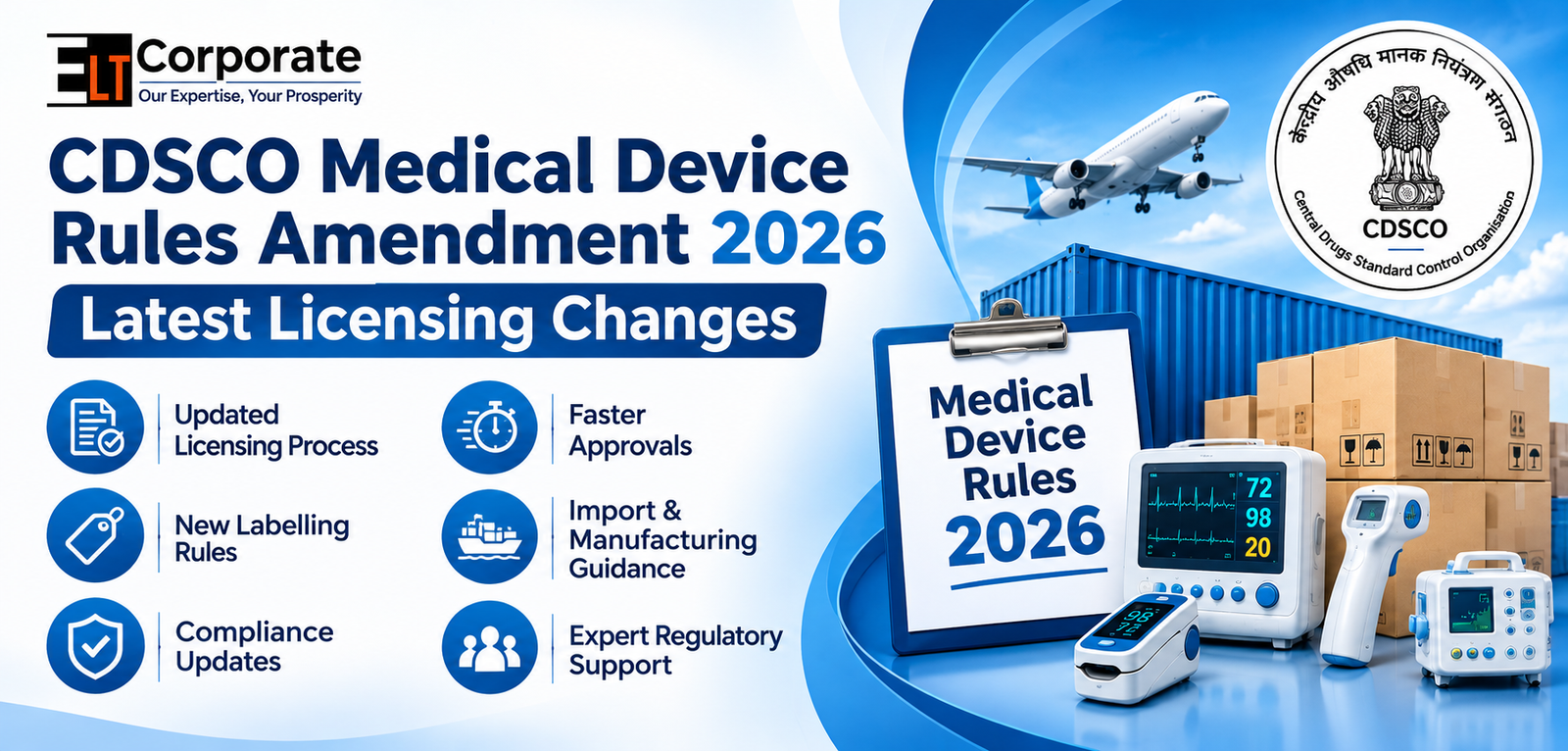
The CDSCO Medical Device Rules Amendment 2026 is an important development for medical device manufacturers and importers operating in India. These changes help businesses understand updated licensing procedures, documentation requirements and regulatory responsibilities under the Medical Devices Rules, 2017.
The medical device industry in India is growing rapidly, and regulatory compliance is an important part of starting and operating a medical device business. Manufacturers, importers and distributors must follow the rules prescribed by the Central Drugs Standard Control Organisation.
In 2026, the Government of India introduced important changes to the Medical Devices Rules, 2017. These changes focus on simplifying regulatory procedures, improving licensing transparency, reducing unnecessary compliance requirements and supporting faster access to medical devices.
The CDSCO Medical Device Rules Amendment 2026 is particularly important for manufacturers who outsource sterilization, companies applying for medical device testing and businesses seeking regulatory approval for imported medical devices.
The amendments also address quality management requirements and recognition of certain international regulatory approvals.
In this blog, we explain the latest changes in simple language so that medical device manufacturers, importers and distributors can understand their responsibilities and prepare for regulatory compliance.
What Are the Medical Devices Rules, 2017?
The Medical Devices Rules, 2017 are the regulatory rules established by the Government of India to control the manufacturing, import, sale and distribution of medical devices.
These rules help ensure that medical devices available in the Indian market meet the required standards of safety, quality and performance.
CDSCO is the central regulatory authority responsible for important medical device regulatory functions in India. State Licensing Authorities also perform licensing functions according to the applicable risk classification and regulatory provisions.
Medical devices are classified into four categories:
| Device class | Risk category | Examples |
| Class A | Low risk | Basic surgical instruments |
| Class B | Low to moderate risk | Hypodermic needles and certain monitoring devices |
| Class C | Moderate to high risk | Certain implants and advanced devices |
| Class D | High risk | Certain life-supporting and high-risk implants |
The applicable licensing authority depends on the device category and the type of activity being carried out.
Why Were the Medical Device Rules Amended in 2026?
The medical device industry requires a regulatory system that protects patients while allowing businesses to operate efficiently.
The Government introduced amendments to address practical challenges faced by manufacturers and other industry stakeholders.
The main objectives include:
- Simplifying medical device licensing procedures.
- Reducing unnecessary administrative requirements.
- Improving transparency in the regulatory process.
- Supporting medical device manufacturers using outsourced Sterilization facilities.
- Providing clearer testing fee requirements.
- Improving quality management and inspection requirements.
- Facilitating regulatory recognition of eligible medical devices approved in certain international jurisdictions.
The CDSCO Medical Device Rules Amendment 2026 includes notified amendments as well as separate draft proposals. Businesses should distinguish between changes that have become law and proposals that are still under consideration.
Major Changes Under the CDSCO Medical Device Rules Amendment 2026
Understanding the CDSCO Medical Device Rules Amendment 2026 is important for companies that outsource Sterilization manufacture medical devices or apply for regulatory approvals. Businesses should review the amended provisions and identify which requirements apply to their products and activities.
The following are some of the important regulatory changes businesses should understand.
Simplification of outsourced Sterilization requirements
One important change relates to medical device manufacturers who use external facilities for Sterilization .
Earlier, manufacturers outsourcing Sterilization activities could face additional licensing requirements, including a separate loan licence requirement for the outsourced Sterilization activity.
Under the amended provisions, a manufacturer using another facility that holds a valid licence under the Medical Devices Rules, 2017, is no longer required to obtain a separate loan licence for that outsourced Sterilization activity.
This can reduce administrative work and compliance costs for eligible manufacturers.
However, manufacturers must maintain proper control over Sterilization processes and comply with the applicable regulatory requirements.
New Sterilization labelling requirements
The amendment also introduces a labelling requirement for manufacturers who outsourceSterilization . Manufacturers must mention the licence number of theSterilization facility on the medical device label as prescribed under the amended Rule 44. This requirement improves traceability and helps identify the facility responsible for Sterilization .
A six-month transition period has been provided for implementing the new labelling requirement.
What manufacturers should do:
- Check the licence status of their Sterilization facility.
- Update product labels and packaging.
- Maintain Sterilization records.
- Verify the details printed on the label.
- Coordinate with the outsourced Sterilization facility.
Introduction of the Ninth Schedule for medical device testing fees
The 2026 amendments introduce a Ninth Schedule containing prescribed fees for specified medical device testing activities. These include testing related to sterility, implantation and bacterial endotoxins. This provides manufacturers and applicants with a clearer reference for applicable testing charges. Businesses should check the relevant testing category and fee before submitting samples to a testing laboratory. The amendment also provides for annual increases in specified testing fees, as prescribed in the schedule.
Recognition of the European Union under Rule 63
Another important development concerns clinical investigation requirements.
The amendment expands the list of recognised stringent regulatory jurisdictions under Rule 63 to include the European Union.
Previously recognised jurisdictions included:
- United States of America
- United Kingdom
- Australia
- Canada
- Japan
The inclusion of the European Union may benefit eligible medical devices that have already received approval in an applicable EU regulatory jurisdiction.
However, this does not mean that every EU-approved medical device automatically receives approval in India. Applicants must still satisfy the applicable Indian regulatory requirements and eligibility conditions for the waiver.
Quality Management System requirements
The 2026 amendments also address Quality Management System requirements in specified audit and inspection provisions.
Manufacturers must pay attention to the applicable quality management requirements under the Medical Devices Rules, 2017.
A proper Quality Management System helps manufacturers maintain consistent product quality, control manufacturing activities, and manage regulatory compliance.
Businesses should review:
- Manufacturing procedures.
- Quality control records.
- Supplier qualification.
- Product testing records.
- Risk management documentation.
- Corrective and preventive actions.
Changes in registration and licensing terminology
The CDSCO Medical Device Rules Amendment 2026 also provides important regulatory updates for businesses involved in medical device licensing. Manufacturers should check their existing licences, product labels and quality management documents to ensure that they follow the applicable amended requirements.
The amendments also introduce a definition of Certificate of Registration under Rule 3, covering specified registration forms, including MD-2, MD-40 and MD-42.
This is relevant to businesses involved in medical device registration and sale or distribution activities.
Applicants should carefully identify the applicable form and licensing pathway for their business activity rather than assuming that every medical device business requires the same licence.
Gazette Tracker
Proposed reduction in manufacturing licence timelines
The Government also published a separate draft amendment in June 2026 proposing shorter manufacturing licence processing timelines.
The proposed changes included:
| Medical device class | Earlier timeline | Proposed timeline |
| Class B | 140 days | 115 days |
| Class C and D | 105 days | 90 days |
The draft also proposed clearer timelines for application scrutiny, notified body audits, compliance verification and licence issuance.
Important: These figures relate to a draft proposal. They should not be treated as guaranteed or automatically applicable statutory timelines unless and until the relevant final amendment is notified.
How Do the 2026 Amendments Affect Medical Device Licensing?
The new amendments are relevant to different types of medical device businesses.
For medical device manufacturers
Manufacturers should review their manufacturing licences, quality management systems, Sterilization arrangements and product labelling.
Companies using outsourced Sterilization facilities should pay particular attention to the new labelling requirements.
For medical device importers
Importers should check whether their products meet the applicable Indian regulatory requirements.
Foreign approval may support certain applications or eligibility for a clinical investigation waiver, but it does not replace the Indian import licensing process.
For medical device distributors
Distributors should verify that the medical devices they purchase and supply have the appropriate regulatory licences. They should also maintain proper purchase, sales and traceability records.
What Documents Should Medical Device Businesses Maintain?
Businesses should maintain the documents relevant to their product category and regulatory activity.
Common documents include:
- Company registration documents.
- Manufacturing site details.
- Device Master File.
- Plant Master File.
- ISO 13485 certificate, where applicable.
- Quality Management System documents.
- Product specifications.
- Risk management documents.
- Testing and validation reports.
- Sterilization validation records, where applicable.
- Product labels and packaging details.
- Existing licences and regulatory approvals.
The exact documentation depends on the type of medical device, its risk classification and the application being submitted.
How Can Businesses Prepare for the New CDSCO Requirements?
Medical device companies should take the following steps to maintain regulatory compliance.
Step 1: Review existing licences
Check whether your manufacturing, import or sale and distribution licences are valid and applicable to your current business activities.
Step 2: Check the latest amendments
Read the applicable Gazette notifications and CDSCO circulars to understand which changes are effective.
Step 3: Update product labelling
Manufacturers outsourcing sterilization should review their labels and include the required sterilization facility licence details.
Step 4: Review quality management systems
Check manufacturing procedures, quality records, testing documents and audit requirements.
Step 5: Maintain testing documents
Keep relevant testing reports, validation records and laboratory fee information.
Step 6: Take regulatory guidance
If you are unsure about the applicable licence, amendment or documentation, consult a medical device regulatory professional before submitting an application.
Following the CDSCO Medical Device Rules Amendment 2026 can help medical device companies understand their compliance responsibilities and prepare the required documentation. Companies should regularly check official CDSCO notifications to stay informed about new regulatory requirements.
How ELT Corporate Can Help
ELT Corporate provides professional guidance on the CDSCO Medical Device Rules Amendment 2026, medical device registration, manufacturing licences, import licences and regulatory documentation. Our team helps businesses understand the applicable regulatory process and prepare their applications.
Our team can assist businesses with:
- CDSCO Registration: Guidance on the applicable medical device registration and approval process.
- Medical Device Manufacturing License: Assistance with MD-5, MD-7 and other applicable manufacturing licence applications.
- Medical Device Import License: Guidance on MD-14 application and MD-15 import licence requirements.
- MD-42 License: Assistance with applicable sale and distribution registration requirements.
- Documentation Support: Assistance with Device Master File, Plant Master File and other regulatory documents.
- Regulatory Compliance: Guidance on applicable Medical Devices Rules, 2017 and subsequent amendments.
- Quality Management Support: Assistance in understanding applicable quality management and documentation requirements.
If you are planning to manufacture, import or distribute medical devices in India, ELT Corporate can help you understand the applicable regulatory pathway and documentation requirements.
Contact ELT Corporate for professional medical device registration and CDSCO licensing assistance.
Frequently Asked Questions
Q1. What is the CDSCO Medical Device Rules Amendment 2026?
The CDSCO Medical Device Rules Amendment 2026 refers to the amendments notified in 2026 to the Medical Devices Rules, 2017. They cover areas such as outsourced Sterilization , labelling, testing fees, quality management and regulatory recognition.
Q2. What are the major changes in Medical Devices Rules, 2017?
Important changes include simplified requirements for outsourced sterilization, sterilization facility licence details on product labels, introduction of testing fee provisions and changes to certain clinical investigation waiver provisions.
Q3. Is a separate loan licence required for outsourced sterilization?
Under the amended Rule 44 provisions, a manufacturer outsourcing sterilization to another facility holding a valid licence under the Medical Devices Rules, 2017, does not need a separate loan licence for that outsourced sterilization activity.
Q4. What is the new sterilization labelling requirement?
Manufacturers outsourcing sterilization must mention the licence number of the sterilization facility on the medical device label as required under the amended rules.
Q5. Does the 2026 amendment reduce medical device manufacturing licence timelines?
A separate June 2026 draft proposed reducing certain manufacturing licence timelines. The proposed reduction included 140 to 115 days for Class B and 105 to 90 days for Class C and D. These should not be treated as final statutory timelines without confirmation of final notification.
Q6. Does EU medical device approval replace CDSCO approval in India?
No. EU approval does not automatically replace Indian regulatory approval. However, eligible devices may benefit from the amended Rule 63 clinical investigation waiver provisions, subject to applicable conditions.
Q7. Who needs to follow the Medical Devices Rules, 2017?
Medical device manufacturers, importers, sellers and distributors must follow the applicable requirements of the Medical Devices Rules, 2017.
Q8. How can ELT Corporate help with CDSCO licensing?
ELT Corporate assists medical device businesses with registration, manufacturing and import licence applications, regulatory documentation and compliance guidance under the applicable Indian medical device regulations.
Comments are closed